
French Bulldog
French Bulldog Teeth: Teething, Care and Common Problems
When French Bulldog puppies teethe, why crowded teeth cause trouble in a short muzzle, how to brush and what the VOHC seal means, and the signs that need a vet.
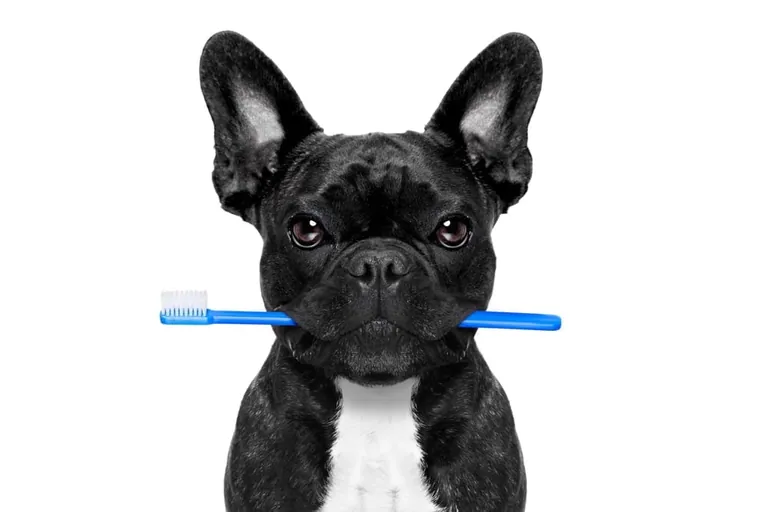
Table of contentsContents
Forty-two adult teeth have to fit into a muzzle built for far fewer. That single fact explains most of what goes wrong with a French Bulldog’s mouth, and most of what you can do about it.
The teething timeline
Puppies grow about 28 baby teeth, which start coming through at around three weeks and have finished erupting by six weeks — so the breeder sees this part, not you.
The part you’ll live through starts later. Teething begins at about 3.5 to 4 months, when baby incisors give way to permanent ones, and by 6 to 7 months most puppies have all 42 adult teeth (AKC). Expect chewing, drool, small teeth turning up on the floor, and a little blood on a toy. All of that is normal.

One thing that used to appear here is worth correcting: puppy ears drooping during teething is not caused by calcium being diverted to new teeth. Ears come and go while a puppy grows, and no veterinary source supports the calcium explanation. The breed standard simply describes the finished article — bat ears, broad at the base and carried erect (AKC breed standard).
Baby teeth that don’t fall out
Check as the adult teeth arrive. A baby tooth still in place when its permanent replacement erupts is a persistent tooth, and small and brachycephalic breeds — bulldogs, pugs, Boston terriers and boxers among them — are more prone to them (VCA Animal Hospitals).
They matter because the crowding traps food and debris, which brings tartar, gingivitis and periodontitis, and the misplaced tooth can cause pain and abnormal wear. They usually need extracting promptly, so tell your vet if you spot a double row.
Helping a teething puppy
- Give them something legal to chew. A teething toy saves your furniture and gives sore gums relief.
- Try it chilled. A damp cloth frozen for an hour, or a frozen chew, is soothing.
- Puppy-proof. Shoes away, cables out of reach, doors shut.
- Keep them busy. Short training sessions and gentle play burn the energy that otherwise goes into chewing.
Never let a puppy chew something harder than their teeth — real bones, antlers and hard nylon can fracture a tooth.
Why this breed needs more dental attention
Crowded, rotated teeth in a short jaw trap plaque in places a normal muzzle wouldn’t. Add the breed’s undershot bite, and you have a mouth that needs help.
What that leads to is gum disease rather than cavities. Caries are genuinely rare in dogs — they occur in around 5% or fewer — because dog teeth are mostly cone-shaped, their saliva is more alkaline, and their diet contains little sugar (Merck Veterinary Manual). Periodontal disease is the opposite story: it affects most dogs by middle age, starting as gingivitis and ending in lost teeth.
Watch for bad breath that arrives and stays, red or bleeding gums, yellow-brown tartar, dropping food, pawing at the mouth, or a sudden preference for soft food. Those are vet visits.
Caring for their teeth
Brushing is the thing that works
Daily brushing with a dog toothpaste is the single most effective habit, and no diet replaces it.
Never use human toothpaste. Many contain xylitol, which is toxic to dogs and can cause hypoglycemia, seizures and liver failure (FDA). Check the label of anything you put in your dog’s mouth.
Build up slowly: let your puppy lick the paste off your finger, then touch the brush to a few teeth, then a few more. Thirty seconds a side is plenty once they accept it.
What food actually does
Dry food alone does not improve oral health (VCA Animal Hospitals), so the old “kibble cleans teeth” line doesn’t hold. Dental diets are different: their kibble is made larger so the tooth sinks in and the piece scrapes as it breaks.
If you use dental food or chews, look for the Veterinary Oral Health Council seal, which marks products tested against a standard for plaque or tartar control, and use them daily — mixing a dental diet with other food reduces its effect. Grains in themselves aren’t the problem the original version of this article suggested.
Professional cleaning
Some dogs need a scale and polish under anaesthetic, and that’s a judgement for your vet based on what’s under the gumline, not on how the teeth look from the front.
Frequently asked questions
How many teeth does a French Bulldog have?
About 28 baby teeth, replaced by 42 adult teeth.
When do French Bulldog puppies stop teething?
Most have their full adult set by six to seven months.
Is dog breath normal?
Not really. A healthy mouth is fairly neutral. Persistent bad breath usually means plaque, gum disease or something stuck.
Do French Bulldogs get cavities?
Rarely. Gum disease is the problem to watch for, which is why brushing beats worrying about sugar.