
Dog Health
Joint Pain in Senior Dogs: Treatment and Everyday Care
Learn how veterinary diagnosis, medication, appropriate activity and home changes can help a senior dog with joint pain.

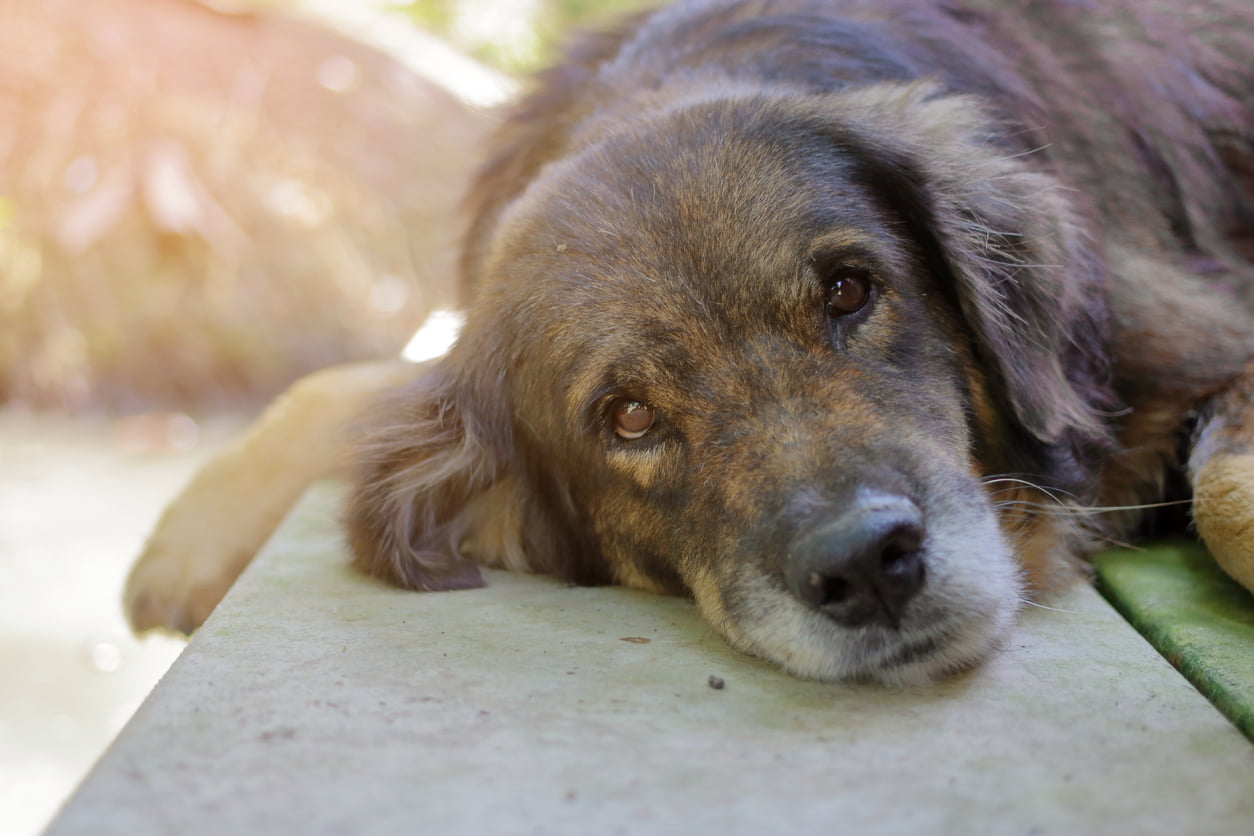
Table of contentsContents
When your older dog hesitates at the stairs or takes longer to get up, it’s worth paying attention. Managing joint pain starts with finding the cause, then combining treatment with everyday changes that help your dog move and rest comfortably.
Book a vet appointment for new limping or stiffness. Seek immediate veterinary advice if your dog is in severe pain, cannot put a leg down or has a serious wound. PDSA’s limping guidance explains those urgent signs. You don’t need to wait until you’re certain the problem is arthritis.
Key takeaways
- Have new pain assessed instead of assuming it’s an inevitable part of aging.
- For diagnosed arthritis, treatment usually combines pain relief with appropriate activity, weight management and changes at home.
- Keep a clear medication list and follow the prescribing instructions, including what to do about side effects.
- Watch familiar activities over time so you and the vet can tell whether the plan is helping.
Understanding arthritis in senior dogs
Osteoarthritis is a progressive joint disease involving damage to cartilage, the tissue that helps cushion movement. It can cause stiffness, difficulty rising, reluctance to exercise and changes in behavior. It also occurs in younger dogs; age alone doesn’t establish the diagnosis.
A vet will watch your dog move and examine the joints. X-rays may help identify joint or bone changes. Cornell’s osteoarthritis guide explains the assessment and treatment options.
Recognizing changes worth reporting
Notice pauses before climbing a step, difficulty settling, or a change in willingness to join an ordinary walk. Describe what you see without trying to assign a disease stage yourself.
Paw injuries, muscle strains and problems involving the spine or nerves can also cause limping. PDSA lists these among the possible causes. Let the vet know whether the change was sudden, whether one leg seems affected and what your dog was doing beforehand.
A short video can help when a movement doesn’t happen in the clinic. AAHA’s pain-assessment guidance supports using owners’ photos and videos alongside examination. Record ordinary activity; don’t make your dog repeat something painful for the camera.
Maintaining a healthy weight for an arthritic dog
Keeping an arthritic dog at a healthy weight can reduce the load on sore joints. But an older dog does not automatically need to lose weight. Ask the veterinary team to assess body condition and explain what a suitable target looks like for your dog. PDSA’s arthritis guidance includes weight control as part of care.
Before the appointment, write down the food, portions and extras your dog gets on a normal day. Include treats, chews and food used to give tablets. If more than one person feeds the dog, put everyone’s contributions on the same list.
For a dog that needs to lose weight, ask for a daily feeding amount, a way to measure it and a date to review progress. Don’t make a large, arbitrary cut to meals or add long walks to compensate for extra food. The food plan needs to fit the activity your dog can comfortably manage.
Our dog calorie calculator provides a resting-energy estimate; it doesn’t prescribe a weight-loss ration. Take the estimate to the discussion along with the food label. A written plan is easier for everyone in the household to follow than “feed a little less.”
Customized exercise for senior dogs

Regular activity remains part of care for many dogs with arthritis. PDSA recommends short, regular walks, unless the treating vet advises otherwise. Sudden increases in exercise and repeated jumping, skidding or sharp turns can leave a dog sore.
Making walks manageable
Choose a short route with chances to stop and sniff, and an easy way home if your dog tires. Go at your dog’s pace. Familiar surroundings can also help a senior dog whose sight or hearing is changing. These suggestions follow PDSA’s senior-dog exercise advice.
There isn’t one walk length that suits every senior dog. Agree on a starting routine, then note how your dog moves during the walk and after resting. If the usual outing becomes difficult, contact the clinic to review the plan. Don’t judge the whole day’s activity only by how eager your dog looked when you picked up the leash.
Swimming, hydrotherapy and rehabilitation
Water-based exercise can be an option, but a supervised rehabilitation session differs from an unsupervised swim. A professional can assess access, support and the movements your dog needs. Cornell lists underwater treadmill work and tailored exercises among rehabilitation options.
Ask what the session is intended to improve and whether there are exercises to practice at home. Get a demonstration and written instructions before trying stretches or equipment. If you cannot safely help your dog in and out of water, tell the team rather than attempting the session on your own.
Nutritional support for joint health
A useful diet discussion covers the whole day’s food, not just a supplement added to dinner. Ask whether the current diet suits your dog’s weight and other conditions, and whether a therapeutic diet has a specific role in the treatment plan.
AAHA’s 2022 pain-management guideline reported weak evidence for most joint nutraceuticals, with stronger evidence for omega-3 fatty acids in dogs. Glucosamine and chondroitin should not be presented as reliably effective simply because they appear in many products.
If a supplement is proposed, bring its label to the appointment. Ask how it fits with the food and medicines already being given, what benefit you should look for and when to reassess. Avoid adding several products at once without a clear plan: you need to know what you’re giving and why.
For a food change, get the exact product name and feeding instructions in writing. Keep the old and new labels until you’re confident the plan is clear. “Joint support” on a package doesn’t tell you whether that food is the right choice for this particular dog.
Pain relief and medication options
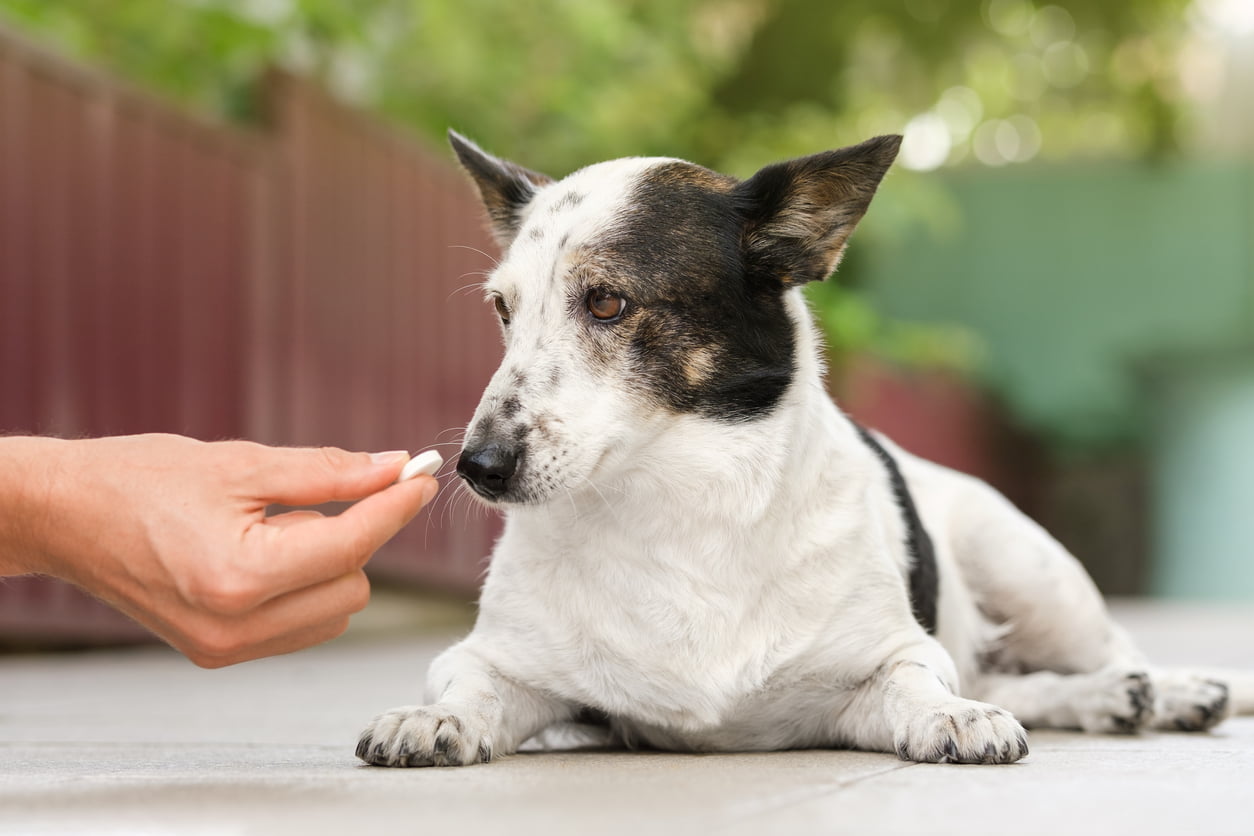
NSAIDs, or nonsteroidal anti-inflammatory drugs, are commonly used for arthritis pain and inflammation. Other medicines may be added or used instead, depending on the dog and their response. This is a prescribing decision, not a list of interchangeable home remedies.
The AAHA chronic-pain medication guidance discusses differences between treatments and their evidence. It does not recommend long-term oral opioids as routine chronic-pain control in dogs. Supplements are not substitutes for a pain-relief prescription.
Using prescribed pain relief safely
Don’t give human pain relievers, leftover prescriptions or extra doses without veterinary instructions. Two NSAIDs, or an NSAID and a steroid, should not be given together. NSAIDs can cause digestive, kidney or liver problems.
Ask for the medication’s client information sheet and discuss baseline blood tests and follow-up monitoring for long-term NSAID treatment. The FDA’s pet pain-reliever guidance explains these precautions.
If a dog taking an NSAID develops vomiting, diarrhea, black or bloody stool, reduced appetite, unusual inactivity or yellowing of the eyes or gums, stop the medication and call the prescribing vet immediately. These signs can occur even in a previously healthy dog.
Keep the instructions beside the medicine, including the contact number for problems. Ask what to do about a missed dose or difficulty giving a tablet before either situation happens. Never guess whether to double the next dose.
What about CBD?
CBD products are marketed for pets, but availability is not evidence that a product is an appropriate arthritis treatment. The FDA’s information on cannabis products for animals states that it has not approved cannabis for use in animals and cautions owners about safety and effectiveness.
Discuss any product you’re considering with the treating vet, including its ingredients and concentration. Don’t replace prescribed pain control with an online recommendation. If your dog becomes unwell after a cannabis product, contact a vet or animal emergency service promptly and keep the packaging available.
Orthopedic beds and home modifications

Start with the places your dog uses most: the route from bed to water, the back door and a favorite resting spot. PDSA’s home-care advice recommends concentrating nonslip flooring in frequently used areas if you can’t cover the whole house.
| Everyday difficulty | A change to consider |
|---|---|
| Feet sliding on a smooth floor | Secure nonslip runners along that route. |
| A favorite spot requires a jump | Offer an accessible resting place at floor level or a stable ramp. |
| Other pets interrupt rest | Set up a quiet, protected resting area. |
| A bed is awkward to get into | Offer a comfortable alternative your dog can enter and leave easily. |
AAHA’s environmental guidance supports secure footing, access to preferred places and protected rest.
An orthopedic or memory-foam bed may be worth considering for comfort, but the label doesn’t establish a treatment benefit. Watch how your dog actually uses it. Can they step onto it, turn around and stand again? Does it slide when they get up? Those observations are more useful than choosing solely by a marketing claim.
You can make a short list by following the dog’s normal route through the house. Include the last step out to the toilet area and the surface beside the water bowl. Changes are most useful when they address a difficulty your dog encounters every day.
Alternative therapies for arthritis management
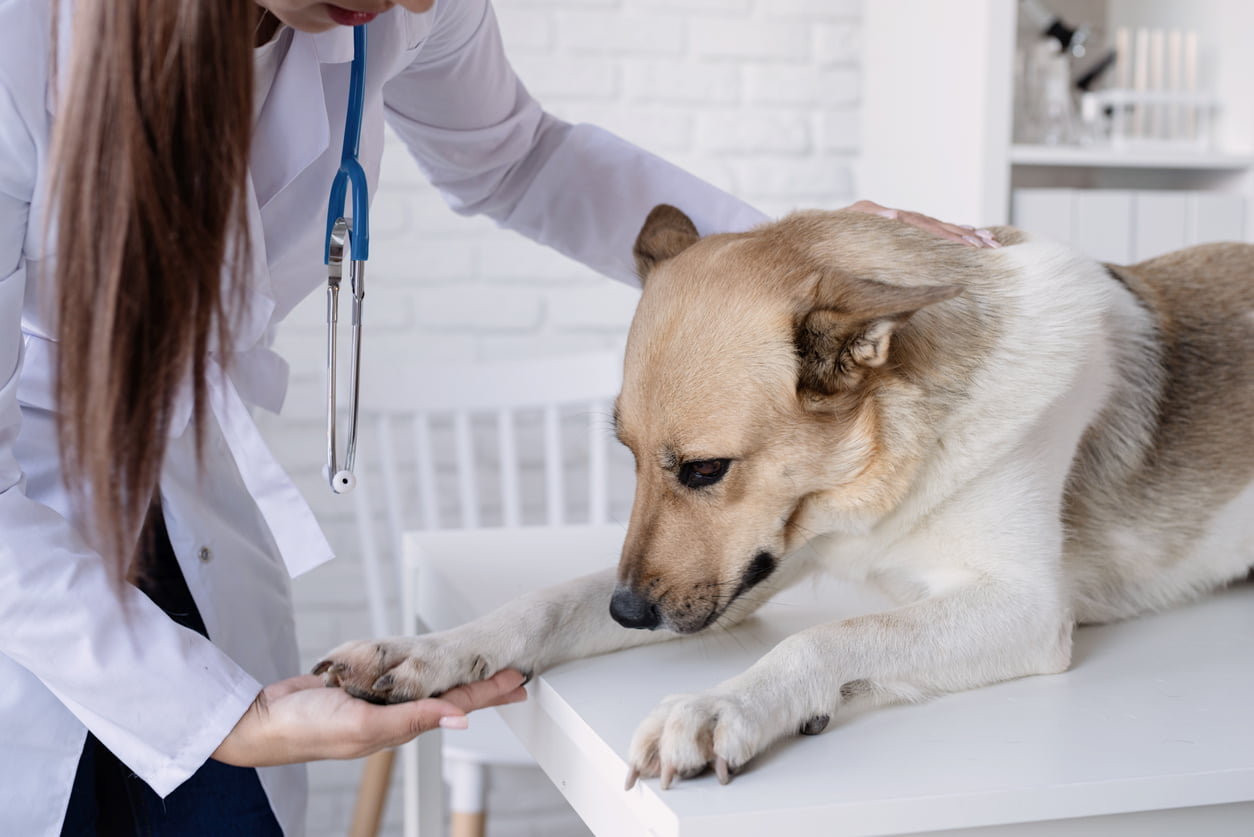
Rehabilitation services may include manual techniques, therapeutic exercises or laser treatment. Acupuncture may also be offered. The evidence and suitability differ between techniques; they shouldn’t be presented as a group of equally proven treatments.
AAHA’s guidance on non-drug approaches discusses rehabilitation and the limits of the veterinary evidence. Its acupuncture section does not establish a dependable benefit for osteoarthritis pain in dogs. A clinic offering a treatment should still explain why it recommends that treatment for your dog.
Before booking a course of sessions, ask:
- What particular activity or sign are we trying to improve?
- What evidence supports this treatment for my dog’s condition?
- How many sessions will we try before reassessing?
- What are the risks, likely costs and alternatives?
- How will this fit with the medicine and exercise plan?
Keep the answers with your care notes. A treatment’s name or a success percentage doesn’t tell you what a worthwhile improvement would look like at home.
Consult your veterinarian for a personalized plan
A useful appointment should leave you knowing what to do between visits. Bring the medication and supplement list, food details, recent observations and any short videos. Explain practical difficulties too, such as stairs you cannot avoid or trouble giving tablets.
AAHA recommends written instructions and follow-up. Ask the team to help prioritize the plan if doing everything at once isn’t realistic. Make sure each person caring for the dog has the same instructions.
Keep a short record of comfortable and difficult days
Owner observations help with chronic-pain assessment. Choose a few familiar activities and describe what happens:
- Date and time: Include when prescribed medication was given.
- Getting up: Did your dog rise easily, pause or need help?
- Usual outing: Note the route, stops and movement afterward.
- Rest and appetite: Record anything different from the usual routine.
- Questions for the clinic: Include new symptoms or trouble following the plan.
These are observation prompts, not a diagnostic score. A note such as “paused at the back step after breakfast” is more useful than “seemed old today.” Include good days so the conversation isn’t based only on the latest difficult moment.
Frequently asked questions
Should you walk an elderly dog with arthritis?
Usually, short, gentle walks remain useful unless the treating vet advises rest or different activity. Follow your dog’s plan and stop if they struggle. See the exercise section for route and routine suggestions.
What is the last stage of arthritis in dogs?
You can’t determine a stage from one sign such as muscle loss or stiffness. More advanced disease can severely restrict comfort and movement, but a vet needs to assess the cause and severity. Cornell explains that prognosis varies. If pain remains poorly controlled, arrange reassessment rather than assuming nothing can help.
How can I help my overweight dog lose weight safely?
Ask for a target weight, measured feeding plan and progress checks. Include treats and tablet-hiding food in the daily allowance. The weight section explains what to bring to that discussion.
Should I consult a veterinarian for managing my dog’s arthritis?
Yes. Diagnosis, prescribing and reassessment need veterinary involvement. Home changes support that care; they don’t establish why a dog is limping. Call sooner for new symptoms or worsening comfort rather than waiting for the routine review.
Living with the care plan
Osteoarthritis has no cure, but treatment can help manage pain and mobility. Keep the plan practical: clear medicine instructions, manageable activity, accessible resting places and observations you can discuss at follow-up. If it isn’t helping enough, the next step is to reassess it with the veterinary team.
PetDT Editorial Team
The PetDT Editorial Team manages and maintains our library of legacy pet care content. With experience across a wide range of pets, including dogs, cats, fish, hamsters, and reptiles, the team works to review and improve older articles so they remain accurate, clear, and helpful for everyday pet owners. As PetDT continues updating inherited content, articles credited to the Editorial Team will be reviewed by Mike or Melissa during the update process.
View all posts by PetDT Editorial Team