
Dog Nutrition
Best Cheap Dog Food To Look Out For!
Cheaper dog food is not automatically worse food. Five affordable options compared on protein, fat and meat content, what actually matters on a label, and the marketing claims to ignore.

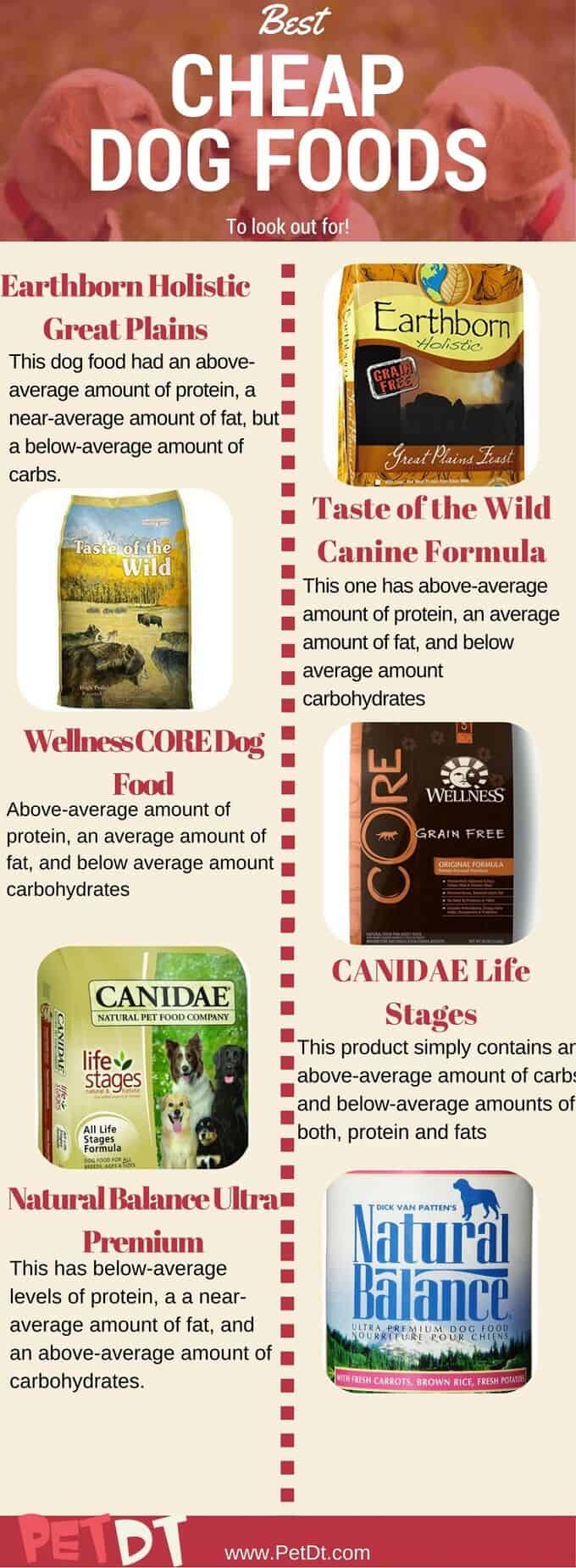
Table of contentsContents
Are you on a strict budget?
Sometimes we all have to. But a tighter budget doesn’t have to mean a worse diet for your dog.
Here’s why: what matters in dog food isn’t the brand name or the price on the bag, it’s the ingredients and the nutrition inside it. Some of the cheaper foods on the shelf do that better than some of the expensive ones.
Below are five affordable foods worth a look, what to check on a label, and the marketing claims worth ignoring.
Best Cheap Dog Food: An Overview
Here are the five we’ll cover, with the detail further down.
What Dog Food Marketing Gets Wrong
There’s a lot of noise in this category, and some of the most repeated claims don’t hold up. Worth knowing which, because they’re the ones driving people toward more expensive food that isn’t better.
“Corn is a cheap filler that’s unfit for human consumption.” This one is everywhere, and veterinary nutritionists don’t accept it. Cooked corn starch is roughly 95% digestible to a dog, and corn contributes usable energy, linoleic acid and amino acids rather than simply bulking out the bag. The USDA grades corn, and pet food manufacturers buy across those grades — “feed grade” is a category, not a synonym for waste. Corn is also a much rarer trigger for food allergies than beef, dairy or wheat, despite what the grain-free marketing implies.
That doesn’t make corn-heavy food automatically good. A food where corn crowds out meat is a poor food. But corn in the ingredient list is not the red flag it’s sold as.
“Expensive means better.” Price tracks marketing spend and packaging as much as it tracks nutrition. Read the guaranteed analysis and the first five ingredients instead.
What actually matters is a named meat source high in the ingredient list, a guaranteed analysis suited to your dog’s age and activity, and an AAFCO statement confirming the food is complete and balanced for that life stage. That last one is the single most useful thing on the bag and most people never look at it.
Food Recalls: A History Worth Knowing
Recall history is a genuinely useful signal, and it’s public.
The big one was 2007. Wheat gluten and rice protein imported from China had been adulterated with melamine — a compound that inflates apparent protein readings, because standard tests measure nitrogen rather than protein itself. Melamine on its own is not especially toxic. Combined with cyanuric acid, also present, it formed crystals in the kidneys.
The scale was enormous. More than 150 brands were pulled, and Menu Foods alone recalled over 60 million containers. A veterinary survey confirmed kidney failure in 236 cats and 112 dogs; reports to the FDA suggested the real figure ran into the thousands.
The lesson is that adulteration happened upstream in the supply chain, at brands both cheap and premium. Price was no protection. What helps is checking a brand’s recall history before you commit to it — the FDA publishes recalls, and it takes two minutes.
A Taste Of Everything: Variation
Should you feed anything besides kibble?
You can, and a bit of variety is fine, but “human food is healthier” isn’t automatically true and some of it isn’t safe. If you’re adding to your dog’s bowl:
- Bell peppers are fine raw or cooked, with the seeds and stem removed.
- Potatoes must be cooked and plain. Raw potato contains solanine, which is toxic to dogs, and it’s concentrated in green or sprouting ones. Cooked and unseasoned is safe as an occasional addition.
- Tuna in moderation only. Tuna accumulates mercury, and tinned tuna in brine carries far more sodium than a dog should have. Water-packed, no salt added, occasionally.
- Olives need pitting — the stone is a choking and obstruction risk — and cured olives are very salty.
Treats and extras should stay under about 10% of daily calories. Past that you’re unbalancing a diet that was formulated to be complete.
How Can I Find The Best Affordable Dog Food?
A few things that genuinely save money:
- Buy the biggest bag your dog will get through in about six weeks. Cost per pound drops, but fat in kibble goes rancid once opened, so a bag too big for your dog is false economy.
- Read the first five ingredients. They make up most of the food. You want a named meat or meat meal at the top — “chicken meal” rather than “meat by-product”.
- Subscribe if the brand offers it. Recurring delivery discounts are usually 5-15%.
- Compare on cost per day, not per bag. A denser food is fed in smaller portions, so a pricier bag can work out cheaper.
Let’s Take A Look At The Best Cheap Dog Food
Comparing macros, ingredients and prices across brands is genuinely tedious, so here’s the summary first.
One caveat on the numbers below: these are dry-matter percentages recorded when this article was written. Manufacturers reformulate, and they don’t announce it. Treat these as a guide to how the foods compare with each other, and check the guaranteed analysis on the bag you actually buy.
| Food Name | Protein | Fat | Carbs | Price |
|---|---|---|---|---|
| Earthborn Holistic Great Plains Feast | 38% | 20% | 34% | Check Price |
| Taste of the Wild High Prairie | 32% | 17% | 43% | Check Price |
| Wellness CORE Natural Grain Free | 38% | 13% | 41% | Check Price |
| CANIDAE All Life Stages | 32% | 17% | 43% | Check Price |
| Natural Balance L.I.D. Sweet Potato & Fish | Check label | Check label | Check label | Check Price |
Macros aren’t the whole story. Ingredient quality and how much of the protein comes from meat rather than peas and legumes matter just as much — which is why each review below looks at both.
Judged on ingredients alone, Earthborn Holistic Great Plains Feast is an above-average food at a reasonable price.
The macros back that up: 38% protein, 20% fat, 34% carbohydrate. That’s a high-protein, moderately high-fat, relatively low-carb profile — well suited to an active dog, and probably more fat than a sedentary one needs.
It’s a bison and beef recipe, and even discounting the protein contributed by peas and flaxseed there’s a meaningful amount of meat in it. That’s the test worth applying to any grain-free food: plant proteins inflate the headline protein figure without delivering the same amino acid profile.
Pros:
- High protein
- Good meat content behind the headline number
- Grain-free, if that suits your dog
Cons:
- Fat content is high for a less active dog
- Kibble is dry and pale, which puts some dogs off
A good option, particularly for a working or high-energy dog.
Taste of the Wild High Prairie is one of the better-known budget options, and it holds up.
The macros are 32% protein, 17% fat, 43% carbohydrate — moderate protein and fat, with carbohydrate making up the largest share. That’s a more middle-of-the-road profile than the Earthborn, and it suits an average adult dog better.
It’s a roasted bison and venison recipe, so despite the grain-free formulation this is a meat-based food rather than one leaning on legumes. Discount the garbanzo beans, peas and flaxseed and there’s still real meat behind the number.
Pros:
- Balanced profile that suits most adult dogs
- Genuinely meat-based
- Widely stocked, so easy to re-buy
Cons:
- Highest carbohydrate share of the five
- Some dogs react to it — introduce it gradually
Wellness CORE Natural Grain Free is the leanest food on this list, and that’s the reason to pick it.
The macros are 38% protein, 13% fat, 41% carbohydrate. High protein with notably low fat — useful for a dog carrying extra weight, or one that needs the protein without the calories that usually come attached.
Setting aside the protein from legumes and flaxseed, there’s a substantial amount of meat in it.
Pros:
- High protein, low fat — a genuinely useful combination
- Good meat content
- Sensible choice for a dog on a weight programme
Cons:
- Low fat won’t suit a very active dog
- Can cause stomach upset if you switch too quickly
CANIDAE All Life Stages is formulated to suit puppies through to seniors, which is the appeal if you have more than one dog at different ages.
The macros are 32% protein, 17% fat, 43% carbohydrate — the same broad profile as the Taste of the Wild, with carbohydrate the largest share and protein and fat both moderate.
It’s a chicken, turkey, lamb and fish meal recipe. Allowing for the protein from flaxseed and alfalfa, there’s a moderate amount of meat in it — less than the Earthborn or the Wellness, but reasonable for the price.
One thing to understand about “all life stages”: to qualify, a food must meet the requirements for growth, which are higher than for adult maintenance. That’s convenient in a multi-dog house, but it means an older or less active dog may put on weight if you feed the same portion.
Pros:
- One bag for dogs of different ages
- Several named meat sources
- Good value
Cons:
- Lowest protein of the five
- Growth-level formulation can overfeed a senior
- Switch gradually — it upsets some dogs otherwise
Natural Balance Limited Ingredient Diets Sweet Potato & Fish is the odd one out here, and it’s on the list for a specific reason.
Limited ingredient diets use a single animal protein and a single carbohydrate source. That’s the point of them: if your dog is itchy, or has recurring digestive trouble, a short ingredient list makes it far easier to work out what’s causing it. Fish and sweet potato is a common starting combination because relatively few dogs have been exposed to fish protein before.
It isn’t the cheapest food here, and if your dog has no sensitivities you don’t need it. But if you’re currently paying for a prescription diet, a limited ingredient food is worth discussing with your vet as a cheaper option.
Check the current guaranteed analysis before buying, as this range has been reformulated more than once.
Pros:
- Short ingredient list makes elimination straightforward
- Named fish protein
- Cheaper than most prescription sensitivity diets
Cons:
- Unnecessary, and pricier, if your dog has no sensitivities
- Consistency divides opinion
- Any elimination diet should be run past a vet first
So, What Should I Keep In Mind?
Household names aren’t automatically the best choice, and a cheaper food often isn’t a worse one. What matters is the ingredient list, the guaranteed analysis, and an AAFCO statement for the right life stage.
Check the recall history before you commit to a brand. It’s public and it takes two minutes.
And whenever you switch foods, do it over a week or so — a quarter new to three quarters old, then half and half, and onward. Most of the “this food upset my dog” reviews you’ll read are really an account of somebody swapping foods overnight.
Here are the five again:
- Earthborn Holistic Great Plains Feast — highest protein and fat, best for an active dog
- Taste of the Wild High Prairie — balanced, meat-based, easy to find
- Wellness CORE Natural Grain Free — high protein, low fat, good for weight control
- CANIDAE All Life Stages — one bag for a multi-dog household
- Natural Balance L.I.D. Sweet Potato & Fish — for dogs with suspected food sensitivities
If your dog is losing weight, itching persistently, or has ongoing digestive trouble, that’s a vet conversation rather than a food-swapping exercise.
PetDT Editorial Team
The PetDT Editorial Team manages and maintains our library of legacy pet care content. With experience across a wide range of pets, including dogs, cats, fish, hamsters, and reptiles, the team works to review and improve older articles so they remain accurate, clear, and helpful for everyday pet owners. As PetDT continues updating inherited content, articles credited to the Editorial Team will be reviewed by Mike or Melissa during the update process.
View all posts by PetDT Editorial Team