
French Bulldog
Blue French Bulldogs: Color, Genetics, Health and Cost
What makes a French Bulldog blue, why blue is outside the breed standard, the health issues linked to dilute and merle coats, and what to know before buying one.
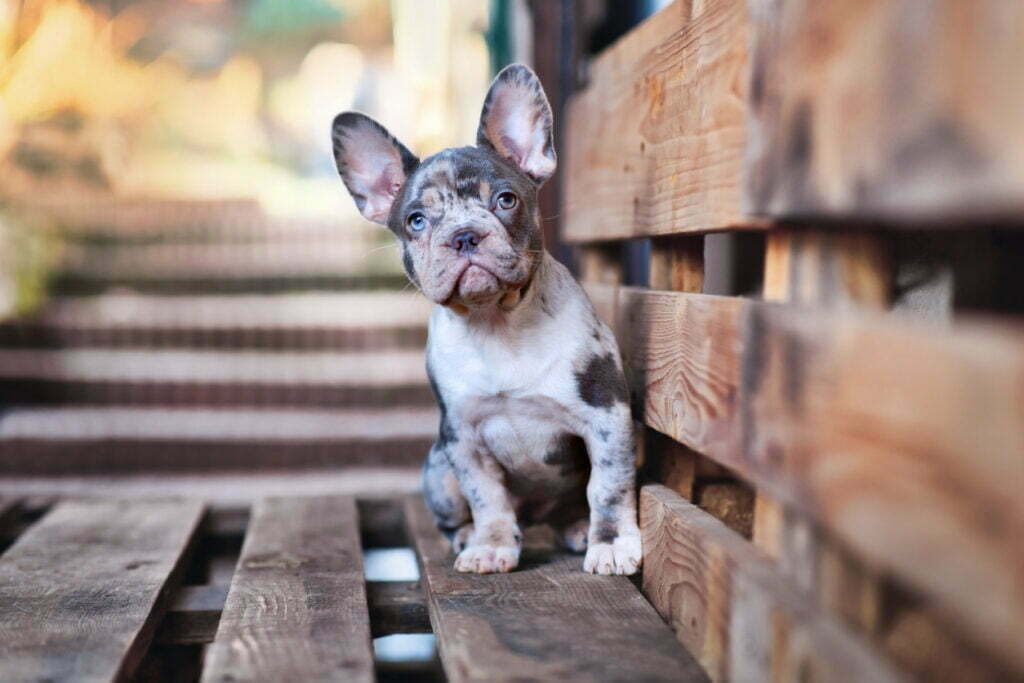
Table of contentsContents
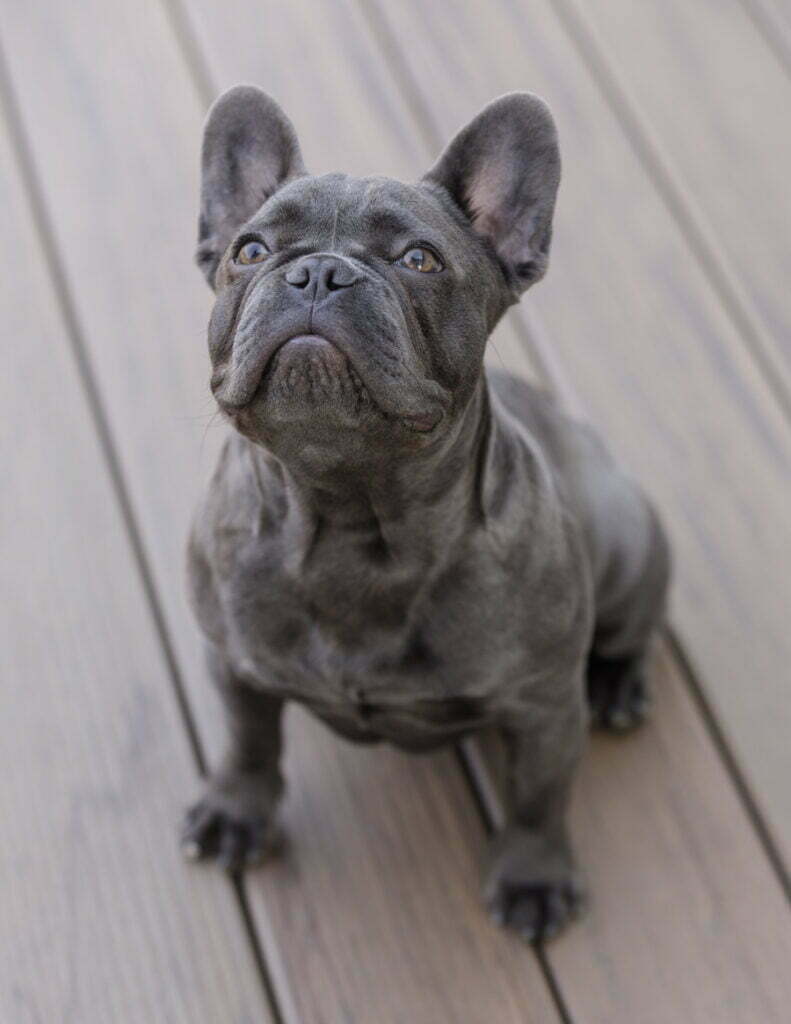
A blue French Bulldog has a gray, slate or blue-gray coat, often with a gray nose to match. The color is popular and usually sold as rare, but it isn’t part of the breed standard, and it’s linked to a condition that affects the coat and skin. Here’s what’s behind the color, and what to weigh before you bring a blue Frenchie home.
Where the blue color comes from
Every dog’s coat color comes from just two pigments: eumelanin, which is black, and phaeomelanin, which is red (VCA Animal Hospitals). Other genes change how much of each pigment a dog makes and where it shows up.
Blue is the result of dilution. A dog who inherits two copies of the recessive dilute gene has its black pigment lightened to gray or blue. Because the gene is recessive, both parents have to carry it for a puppy to be blue.
Is the blue French Bulldog recognized by the AKC?
No. Under the current AKC breed standard, which took effect in 2018, the accepted colors are white, cream and fawn (from light fawn to red fawn), or any combination of them. Brindle, piebald, black masks, black shadings and white markings are the accepted patterns and markings (AKC breed standard). The standard lists blue, blue fawn and merle among the colors that disqualify a dog from the show ring, and blue or green eyes are a disqualification too.
The French Bull Dog Club of America calls these “fad colors.” It says people who deliberately breed disqualified colors are motivated by money, and that calling the colors rare lets them sell the dogs for inflated prices (FBDCA).
Blue color variations
Several blue variations are advertised, and all of them are outside the breed standard.
Blue merle
Merle creates irregular patches of diluted and full-color pigment, and it only affects black pigment. A blue merle combines the merle pattern with blue dilution, giving a mottled gray, silver and blue coat, sometimes with blue eyes.
Merle raises real health concerns. It carries an increased risk of impaired hearing and sight, particularly in dogs with two copies of the gene, and the Royal Kennel Club in the UK doesn’t register merle French Bulldogs (Royal Kennel Club). According to the French Bulldog Rescue Network, the purebred French Bulldog gene pool doesn’t carry merle at all, and merle “French Bulldogs” are produced by crossing in another breed, usually a Chihuahua (FBRN).
Blue fawn
A blue fawn has a fawn coat with a gray or blue-gray mask and nose where a standard fawn would have black ones. That’s because dilution lightens the black pigment.
Blue pied
A blue pied Frenchie has the piebald pattern, meaning a mostly white coat, with blue patches instead of black or brindle ones.
Blue brindle
A blue brindle has the brindle pattern, but its stripes are gray-blue rather than black.
How much do blue French Bulldogs cost?
Prices vary widely by seller and change quickly, so we don’t quote a figure. Expect blue Frenchies to be advertised for more than standard colors. The breed club’s point about “rare” colors applies here: a higher price doesn’t mean better breeding or better health.
The purchase price is only the start. Like every Frenchie, a blue dog can have breed-related health problems, so budget for vet care and consider pet insurance.
Health concerns in blue French Bulldogs
Blue Frenchies share the breed’s usual health risks, including breathing problems linked to their flat faces. Their color adds more to think about.
Color dilution alopecia
Color dilution alopecia is an inherited condition that causes patches of thinning hair or hair loss in dogs with dilute coats, such as blue or fawn, usually along the back and body (VCA). The skin can become scaly or itchy, and bacterial infections can develop. Affected puppies are born with a normal-looking coat, and signs may start at 6 months of age or later.
There’s no cure, but the condition can be managed with medicated shampoos, treatments for dry skin and sometimes antibiotics for infections. Affected dogs and their relatives shouldn’t be bred.
Deafness
Congenital deafness in dogs is linked mainly to the piebald and merle genes, which put white or diluted areas in the coat, rather than to blue dilution itself (OFA). So if you’re looking at a blue merle or a blue pied puppy, ask about hearing. Puppies can have a BAER hearing test from 35 days old.
Caring for a blue French Bulldog’s coat
A blue Frenchie’s coat needs the same simple care as any Frenchie’s. French Bulldogs aren’t known for shedding lots, so a weekly brush is usually enough (PDSA). They also need regular nail trims and cleaning of the ears and facial folds (French Bull Dog Club of America).
While you brush, look for thinning patches, flaky skin or bumps, especially along the back, and see your vet if you notice any. Our guides to bathing a French Bulldog and French Bulldog food cover the rest of their routine care.
Blue French Bulldogs vs. other French Bulldogs
Apart from the color, a blue French Bulldog has the same build and needs as any other Frenchie. The differences come down to:
- Genetics: a blue coat comes from two copies of the recessive dilute gene.
- Breed standard: blue is a disqualification.
- Price: blue dogs are usually advertised for more.
- Health: the breed’s usual risks apply, with color dilution alopecia added, and merle brings hearing and sight risks too.
Pros and cons of blue French Bulldogs
Buying a blue Frenchie, like any dog, deserves careful thought.
Pros
- Frenchies aren’t known for being big barkers unless they’re bored or something is wrong.
- Their short coat is quick to groom.
- They need moderate exercise, up to an hour a day split into shorter walks and playtime, rather than long runs.
- Many people love the look of the color.
- Their small size suits apartment living.
Cons
- Blue dogs have the breed’s usual health risks, plus color dilution alopecia.
- Like all flat-faced Frenchies, they overheat and struggle to breathe quickly in warm weather.
- They usually cost more.
- Finding a responsible breeder is harder. The breed club says no responsible breeder would breed against the breed standard, so read our guide to questions to ask a French Bulldog breeder before you commit.
Interesting facts about French Bulldogs
- The breed’s roots are English. In the 1800s, lace makers in Nottingham kept small toy bulldogs, and when machines took over their work, many moved to Normandy in France and took their dogs with them. American fanciers later founded the first French Bulldog club and standardized the breed’s bat ears (AKC).
- French Bulldogs are poor swimmers and can easily drown because of their front-heavy build, so they should never be left unattended near water. A dog life jacket is a good idea whenever they’re close to it.
- Many are born by C-section. A study of more than 22,000 litters across 151 breeds found that more than 80% of French Bulldog litters were born by caesarean section (Evans and Adams, 2010).
- The French Bulldog was the most popular breed in the US in 2025, for the fourth year in a row (AKC).
Conclusion
Blue French Bulldogs are striking, and a blue Frenchie can be just as loving as any other. But blue is outside the breed standard, it’s tied to color dilution alopecia, and merle versions carry hearing and sight risks. If you’re drawn to a blue puppy, ask detailed questions about the parents’ health, and look closely at the coat, eyes and hearing. A standard-colored Frenchie from a responsible breeder avoids those color-related risks altogether.