French Bulldog
French Bulldog Food Allergies: Signs, Diagnosis and Elimination Diets
How to tell whether your French Bulldog's itching or stomach upset could be a food allergy, how vets diagnose it with an elimination diet, and what to expect.

Table of contentsContents
Itchy skin, ear infections that keep coming back and loose stools can all be signs of a food allergy in a French Bulldog. They can also be caused by fleas, environmental allergies or something else entirely, so the way to find out is to work through it with your vet.
Skin problems are common in the breed. In a Royal Veterinary College study of 2,228 French Bulldogs under veterinary care in the UK, skin problems were the most common group of conditions overall (ScienceDaily). Our guide to French Bulldog health issues covers the breed’s other common problems.
Food allergy vs. food intolerance
Both are adverse reactions to food, but only one involves the immune system. A food allergy is an exaggerated immune response to part of the diet. A food intolerance, such as lactose intolerance, isn’t an immune reaction at all (Merck Veterinary Manual).
The signs can overlap. For skin reactions to food, the standard way to find the cause is an elimination diet followed by a food challenge (Olivry and colleagues, 2015).
A reaction to a food doesn’t mean the food is poor quality. A dog with a food allergy is reacting to a specific ingredient, whatever brand it comes in.
Which foods cause allergies in dogs?
Food allergens are usually proteins. A review of published studies found beef, dairy products, chicken and wheat to be the most likely causes of food reactions in dogs (Mueller, Olivry and Prélaud, 2016). Eggs, corn and soy are also on the Merck Veterinary Manual’s list of foods dogs are most often allergic to.
How common are food allergies?
Merck estimates that food allergies affect 1% to 2% of dogs receiving any kind of veterinary care. The odds are much higher in an itchy dog: across studies, 9% to 40% of dogs with itchy skin turned out to have a food allergy (Olivry and Mueller, 2017).
A food allergy can start at almost any age. In dogs, Merck reports it beginning anywhere from under 6 months to 13 years, so a dog who has eaten the same food for years can still develop one.
Signs of a food allergy
Skin and ears
Itching is the main sign, most often around the ears, paws and belly, and less often around the bottom and genitals. You might see your Frenchie scratching, licking, chewing or rubbing those spots.
Food-allergic dogs also tend to get the same infections again and again: ear infections, bacterial skin infections (superficial pyoderma) and yeast infections of the skin (Merck; University of Illinois College of Veterinary Medicine).
A food allergy can look a lot like an airborne allergy, such as an allergy to pollen. One clue is the calendar: food allergy itching doesn’t change much from season to season.
Stomach and bowels
Vomiting and diarrhea can both be signs of a food allergy (VCA Animal Hospitals). In a review of published cases, diarrhea and more frequent bowel movements were the digestive signs most often reported to improve with a change of diet. About a quarter of the food-allergic dogs in the dermatology studies had both digestive and skin signs (Mueller and Olivry, 2018).
Plenty of other things upset a dog’s stomach, so talk to your vet before assuming food is to blame.
Why constant scratching needs a vet visit
Scratching and licking break the skin, and bacterial infection (pyoderma) often sets in through those small wounds on allergic skin (VCA). Look for pimple-like bumps, circular crusts, flaky patches and hair loss.
Rather than trying to stop the scratching yourself, take your dog to the vet. They can relieve the itch and treat any infection while you work out what’s causing it.
Other causes to rule out
Itchy skin has lots of possible causes, and food allergy often turns up alongside other conditions (Merck). Your vet will usually want to rule out:
- flea allergy, a common cause of itching in dogs, usually worst from the middle of the back to the base of the tail and down the back legs
- environmental allergies (atopic dermatitis), such as a reaction to pollen
- parasites
A dog can have more than one of these at once, which is part of why diagnosis takes patience.
How vets diagnose food allergies
Why allergy tests can’t give the answer
Blood and skin tests aren’t reliable for diagnosing food allergy (Merck). A 2026 article from the University of Illinois College of Veterinary Medicine goes further: no blood, skin, saliva or hair test is currently considered dependable. The one reliable method is a food trial, meaning an elimination diet followed by a food challenge.
The elimination diet
For the trial, your dog eats one carefully chosen diet and nothing else, usually for 8 to 12 weeks (VCA). In published studies, signs had resolved in more than 90% of food-allergic dogs by 8 weeks (Olivry and colleagues, 2015), though some dogs may need 10 weeks or more.
There are three types of trial diet. Hydrolyzed protein diets break the proteins into pieces too small for the immune system to recognize. Novel protein diets use ingredients your dog has never eaten, which is why your vet will ask about everything your Frenchie has eaten in the past. The third option is a home-prepared diet formulated by a veterinary nutritionist.
Novel protein diets come with a few pitfalls, according to the University of Illinois article. Similar proteins can cross-react, a dog’s diet history may be unknown (common with rescue dogs), and commercial foods can be contaminated.
That contamination is why a store-bought “limited ingredient” food isn’t a reliable substitute. A review of testing studies found ingredients that weren’t on the label in 33% to 83% of pet foods with novel or limited ingredients suggested for elimination diets (Olivry and Mueller, 2018). Ask your vet which diet to use.
Raw diets aren’t a safe shortcut either. When the FDA tested 196 raw pet food samples, 15 contained Salmonella and 32 contained Listeria monocytogenes, bacteria that are a risk to pets and to the people handling the food.
Nothing else during the trial
One slip can undo weeks of work. During the trial, your dog shouldn’t have other foods, treats or table scraps, chew toys or edible chews, supplements, or flavored medications, including flavored flea, tick and heartworm preventatives (University of Illinois; Merck).
Don’t stop any medication without talking to your vet first. They can suggest alternatives that fit the trial. If treats matter to your dog, ask whether you can use pieces of the trial food.
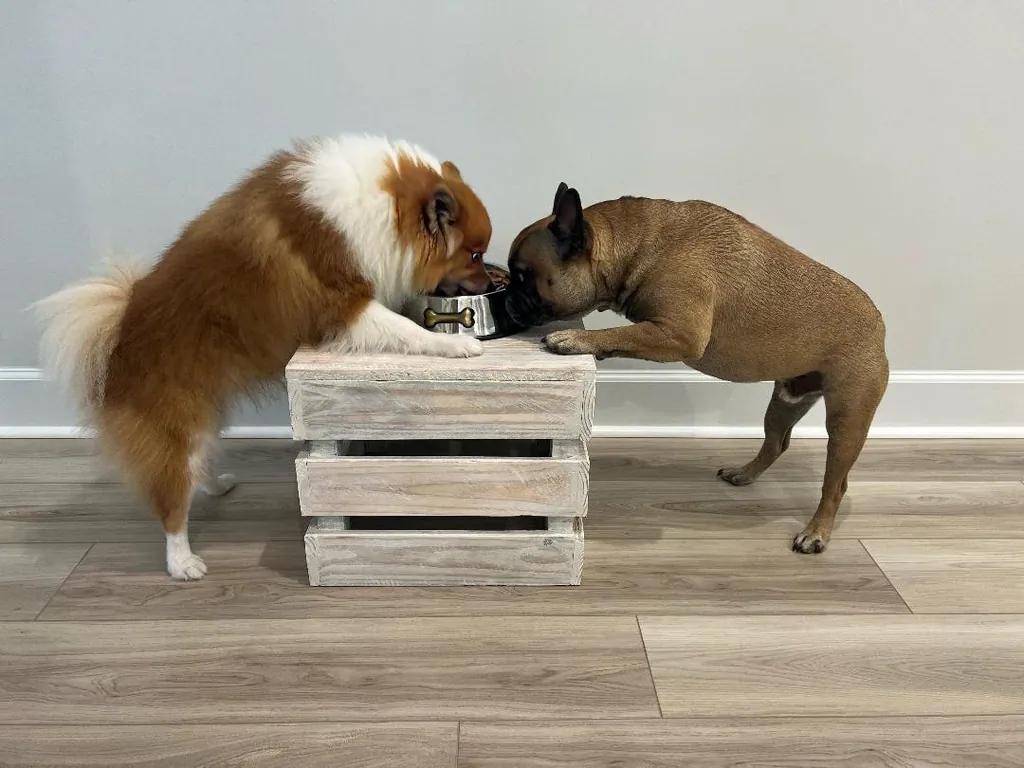
Other pets need managing too. My Frenchie, Charlie, will happily eat out of the same bowl as Kashi, as you can see below. During a food trial, feed pets separately and pick up the bowls after meals, so your dog can’t finish anyone else’s food.
Keep a diary while the trial runs. Note how itchy your dog seems, the state of their ears and stools, and anything they ate by accident, so you and your vet can judge the result.
Making mealtimes interesting
A limited diet doesn’t have to mean boring meals. Serving the trial food in a slow feeder or puzzle bowl, such as the Outward Hound Fun Feeder, gives your Frenchie something to work at without adding anything new to the diet. Skip food-dispensing toys that need treats or spreads.
The food challenge
If your dog improves on the elimination diet, the next step is a food challenge. With your vet’s guidance, you feed the previous diet or individual ingredients again and watch for signs to come back. If they do, that confirms a food allergy.
Signs usually return between 1 hour and 14 days after the challenge, according to Merck. In a review covering 234 dogs, signs had come back in about 80% of dogs by day 7 and in more than 90% by day 14 (Olivry and Mueller, 2020).
Putting old foods back can feel risky once your dog finally feels better. Without the challenge, though, you can’t be sure the diet was what helped, and adding ingredients back one at a time shows you which ones to avoid.
Living with a food allergy
There’s no cure for food allergies in dogs; the only treatment is avoiding the ingredients that cause the reaction (VCA). Once you know your dog’s triggers, work with your vet on a complete long-term diet, check the ingredients of treats, chews and flavored medications, and make sure everyone who feeds your dog knows what’s off-limits.
If signs come back, see your vet, since another cause such as fleas or an environmental allergy may be involved. Our complete guide to French Bulldog food covers everyday feeding.
Frequently asked questions
What’s the difference between a food allergy and a food intolerance?
A food allergy involves the immune system reacting to part of the diet, usually a protein. A food intolerance, such as lactose intolerance, doesn’t involve the immune system. The signs can overlap, so your vet will use a food trial to find out whether food is the cause.
What foods are French Bulldogs most often allergic to?
Research on dogs in general, rather than French Bulldogs specifically, points to beef, dairy products, chicken and wheat as the most likely food allergens. Eggs, corn and soy are also commonly reported.
What are the signs of a food allergy in a French Bulldog?
Itching around the ears, paws and belly is the main sign. Repeated ear or skin infections are common too, and some dogs have digestive problems such as diarrhea, more frequent bowel movements or vomiting.
Can a blood test diagnose food allergies in dogs?
No. Blood, skin, saliva and hair tests aren’t considered reliable for diagnosing food allergies. An elimination diet followed by a food challenge is the reliable way to diagnose one.
How long does an elimination diet take?
Plan for at least 8 weeks, sometimes 10 to 12, followed by a food challenge to confirm the result. Your vet will tell you how long your dog’s trial should last.