Dog Training
Helping a French Bulldog Get Along With Other Dogs
How to introduce a Frenchie to other dogs, step by step, and the breed-specific problem nobody mentions: a flat face and a stump of a tail are hard for other dogs to read.
Table of contentsContents
French Bulldogs are usually sociable with other dogs, which makes introductions easier than they are for many breeds. What the usual advice misses is that a Frenchie has a harder time being understood than most dogs do, and that’s worth knowing before you start.
The thing nobody mentions: they’re hard to read
Dogs talk to each other with their faces and their tails. A French Bulldog is short of both.
Brachycephalic dogs have measurably less developed facial muscles than long-muzzled dogs, and the researchers who measured them suggest this restricts the facial signalling those muscles produce (Schatz and colleagues, 2021). Add a tail too short to carry much meaning, ears fixed upright, and prominent eyes that can read as a hard stare, and you have a dog whose polite signals may not land.
The practical consequence: a Frenchie can be perfectly friendly and still get a sharp response from a dog who misread them, or fail to notice that another dog has asked them to back off. That isn’t a reason to keep them away from other dogs. It’s a reason to supervise more closely than you would with a Labrador, and to step in earlier.
Before you introduce anyone
- Pick the right partner. A calm, well-socialized adult is the best first friend. An adolescent who plays like a bulldozer is not, because a 25-pound dog gets flattened.
- Swap scent first if you can: a blanket or toy from the other dog, left where yours can investigate it.
- Time it well. Not first thing when they’re wound up, not in the heat of the day, and not when either dog is hungry or tired.
- Take good treats, and have one person per dog.
Step 1: Walk together, don’t meet
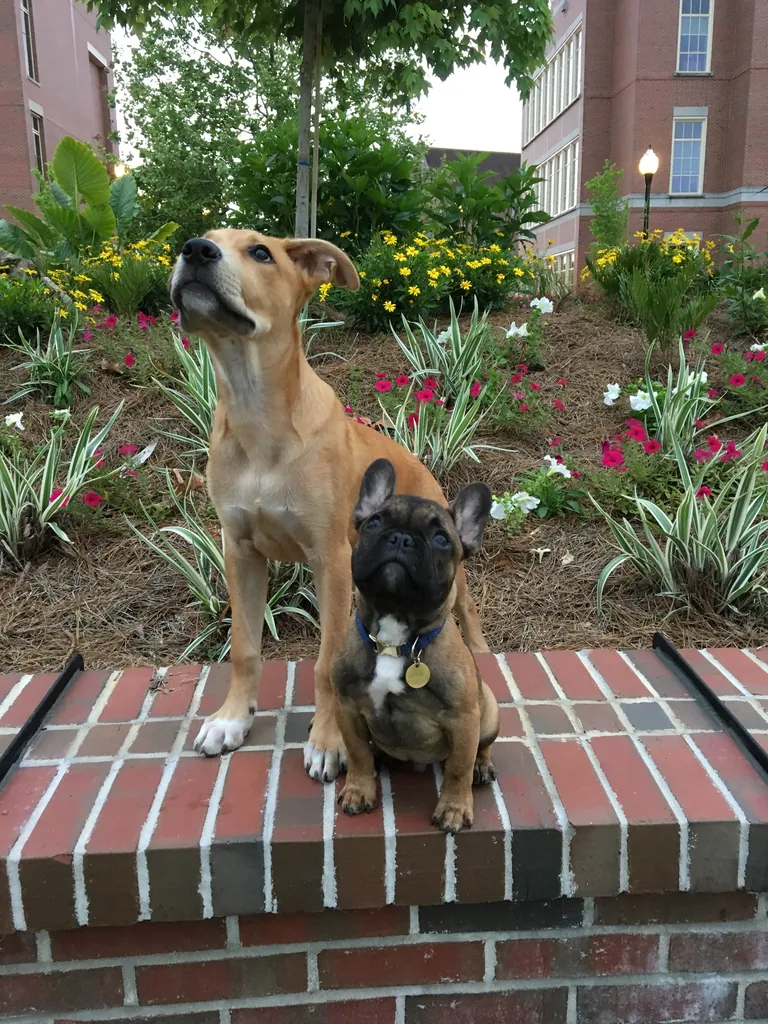
The best first introduction isn’t a meeting at all.
Walk the two dogs in the same direction, a good distance apart, with a person on each. Let them see and smell each other without any pressure to interact. Gradually close the gap over the walk if both are relaxed.
Parallel walking does the work a nose-to-nose greeting does, without the bit where two strangers are suddenly in each other’s faces on a short lead.
Step 2: A brief greeting on loose leads
Somewhere neutral, outdoors, with no other dogs about.
- Let them approach in a curve rather than head-on.
- Keep the leads loose. A tight lead changes a dog’s posture and raises the tension, and owners tighten up without noticing.
- Three to five seconds, then call both dogs away and reward.
- Repeat a few times. Short and repeated beats long and hopeful.
One pair of dogs at a time. More dogs means more to manage and more chance of someone being overwhelmed.
Watch the early signals, not just the obvious ones. Growling, stiffening and bared teeth are late. Before those come: lip-licking, yawning, turning the head away, the whites of the eyes showing, a sudden freeze, or one dog repeatedly trying to leave. Any of those and you’ve already waited slightly too long, so make some space and try again later (VCA Animal Hospitals).
Step 3: Off-lead, in a fenced space
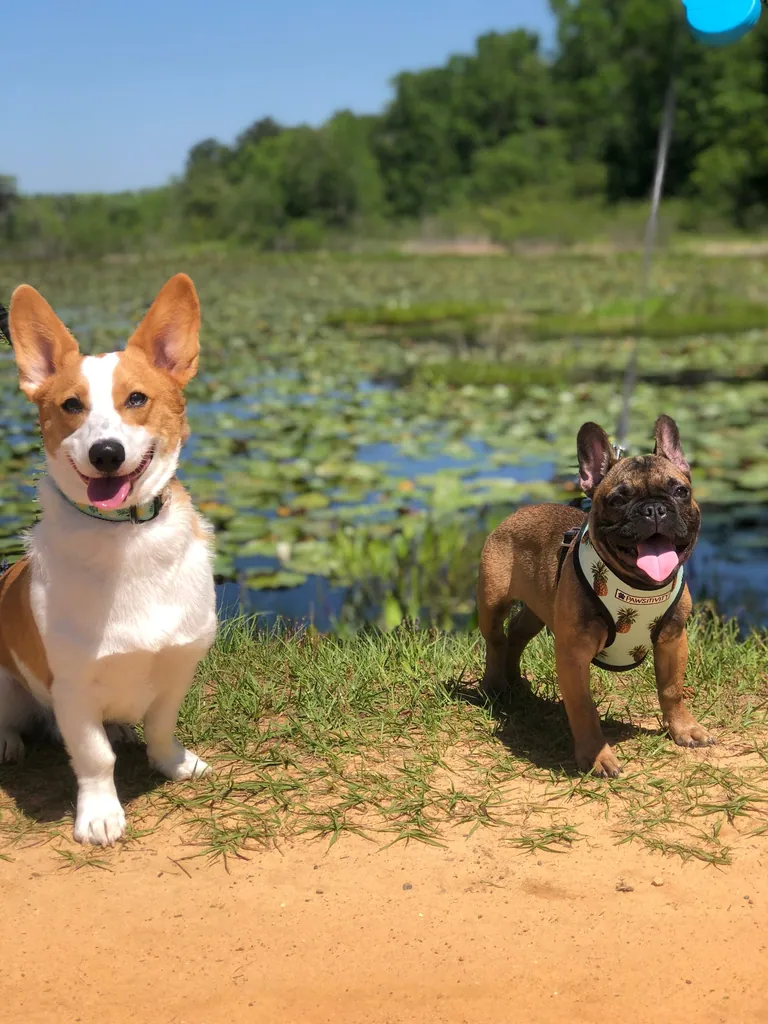
Only once several lead greetings have gone well, and only somewhere securely fenced: a garden, a hired field, not an open park.
The earlier version of this article suggested going off-lead at the second meeting in the same open outdoor space. That’s quick, and it assumes a recall that many Frenchies don’t have. Leads dragging on the ground is a reasonable halfway house, as long as someone is watching them in case they snag.
Keep it short, five or ten minutes to start. End while it’s still going well rather than when it stops going well.
Don’t hover directly over them, but do watch. Good play is loose, bouncy and takes turns, with pauses. If one dog is doing all the chasing, or the Frenchie keeps trying to get away, call a break.
Step 4: At home
Home is the hardest place for a resident dog, so make it easy:
- Pick up food bowls, chews and favourite toys before the visitor arrives.
- Meet outside first and come in together, rather than opening the door onto a waiting dog.
- Give both dogs somewhere to retreat to, and don’t let either be cornered.
- Feed separately, always.
If your dog guards things from the other, that’s resource guarding rather than territory, and it’s treatable; our growling guide covers what to do.
Step 5: More friends, carefully
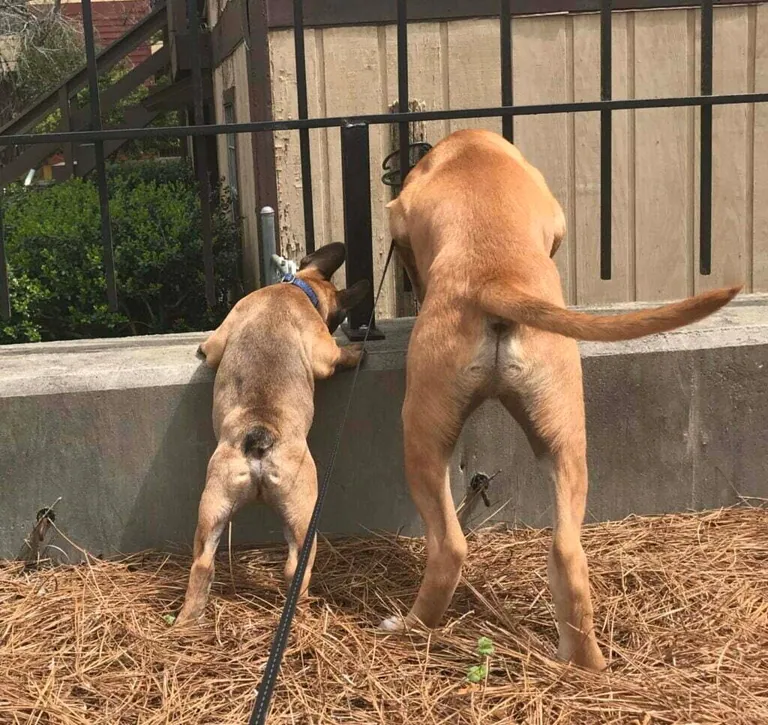
Repeat with new dogs. Your Frenchie won’t like every dog, and that’s normal.
Dog parks are the hard mode version of all of this, and I’d be cautious with this breed. Uncontrolled groups, a small flat-faced dog who can’t run away well, and owners who aren’t watching add up badly. If you go, go at quiet times, stay near your dog, and leave early.
Keep an eye on the breathing
Play is exercise, and this is a breed that overheats quickly and tires fast (PDSA). Noisy breathing, slowing down or standing with the elbows out means stop, whatever the other dog still wants to do. Short sessions in the cool part of the day.
If it goes wrong
Most scuffles end in seconds and neither dog is hurt. If you need to separate them, don’t reach between them or grab collars with your hands near their heads. Make a loud noise, throw a coat over them, or if two people are present, each takes their own dog’s back legs and walks backwards.
Afterwards, separate them properly, check both dogs over, and don’t tell either off. Punishing a dog after a fight teaches them the other dog predicts trouble (AVSAB).
If it’s more than a one-off, get a qualified reward-based behaviourist involved rather than repeating the introduction and hoping.
The short version
Walk together before you meet, greet briefly on loose leads, go off-lead only in a fenced space once that’s easy, and strip the house of anything worth guarding before a dog comes over. Watch the quiet signals rather than waiting for a growl, and remember that other dogs may struggle to read your Frenchie’s face. Our guide to playing with your French Bulldog covers what to do once they’re friends.