Dog Training
Why Is My French Bulldog Growling?
A growl is information, not defiance. The reasons a Frenchie growls, how to tell play from warning, and why punishing a growl is the one thing not to do.
Table of contentsContents
A growl is a dog telling you something before they have to do anything about it. It is not defiance, it is not rudeness, and it is not your dog claiming rank in the household. It’s information, and the useful response is to work out what it’s about.
Here’s what a Frenchie is usually saying.
Start with pain
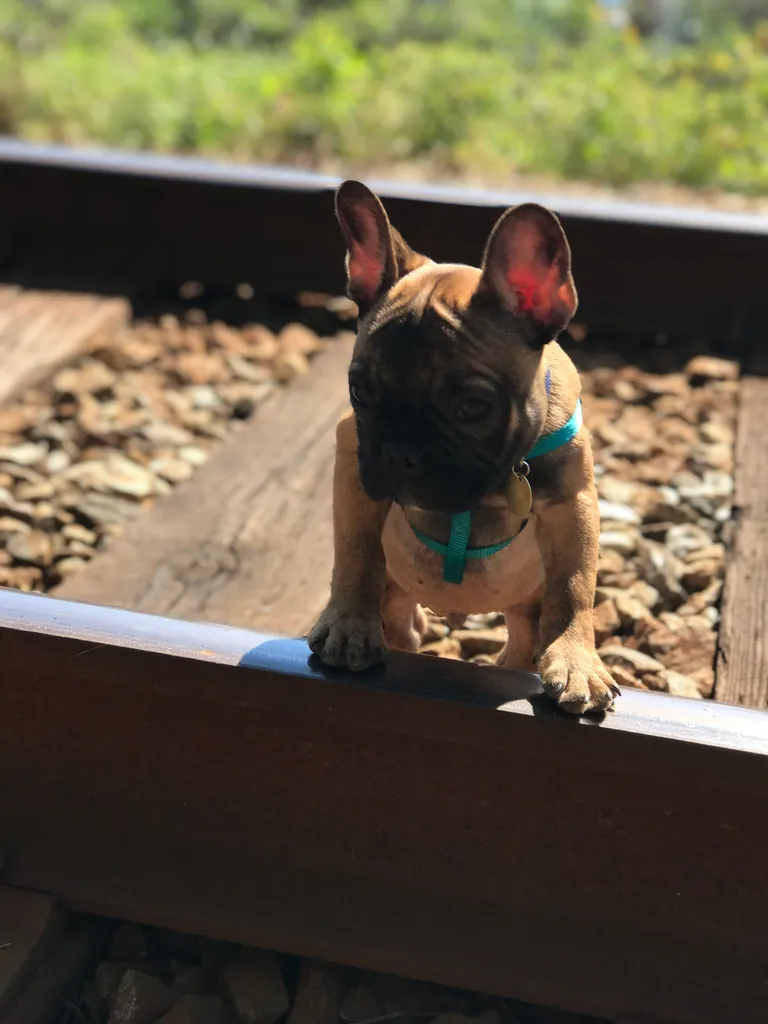
Any dog in pain has a shorter fuse, and a growl that’s new in a settled adult is a reason to think about pain first (AVSAB).
French Bulldogs have a lot that can hurt: crowded teeth, sore ears, itchy skin, prominent eyes, and a spine prone to malformed vertebrae. A dog who growls when lifted, when touched in one particular place, or when moved off the sofa may be telling you it hurts.
The earlier version of this article said that if a dog growls while you’re trying to help with an injury, it’s best to leave them alone. Half right: back off, yes, but then call your vet rather than leaving it. A dog who can’t be handled is a dog who needs handling by someone with pain relief.
If growling is new, the vet comes before the trainer.
Fear
The most common driver. A frightened dog who can’t get away growls because the alternatives are worse. New places, unfamiliar objects, someone reaching over their head, being cornered.
What helps is distance and time, not persuasion. Let the dog retreat, give them room, and pair the frightening thing with something good at a distance they can cope with. What doesn’t help is holding a dog still to show them there’s nothing to fear.
Guarding something
Food, a chew, a toy, a bed, sometimes a person. A dog guarding is saying they expect to lose something valuable, and it’s common and treatable (VCA Animal Hospitals).
The fix is trading, not teaching a dog to share. Approach, drop something better nearby, and walk away. Repeated often enough, your approach starts to predict gain rather than loss. Never wrestle an item out of a dog’s mouth, and don’t take food away to prove you can: that confirms exactly what the dog was worried about.
Being startled or disturbed
Frenchies sleep deeply. A dog woken suddenly may growl before they’re properly awake, which is worth knowing in a house with children. Wake them with your voice rather than your hands.
Competition for your attention
If you’re stroking another dog and your Frenchie growls at both of you, that’s competition over something they value, which in this breed is usually you. Manage it by not creating the contest: greet them separately, reward calm waiting, and don’t let one dog crowd the other out.
The original article called this jealousy and left it there. The practical version is that your attention is a resource, and resources get guarded.
Growling in play
Play growling is normal and not a problem. It’s higher, shorter and comes with a wagging back end, bouncy movement, exaggerated play bows, and a dog who keeps going back for more.
Warning growls are lower and longer, and come with a stiff body, a hard stare, a closed mouth or bared teeth, and a dog who wants the thing to stop.
The test that settles it: separate the dogs for a few seconds and let the one who was growling choose. If they go straight back in, it was play.
What not to do
Never punish a growl. This is the one that matters. A growl is the warning that comes before a snap, and a dog punished for growling can learn to skip the warning rather than to feel differently. You don’t want a dog who goes from still to bite with nothing in between.
Confrontational handling makes this worse generally. Reward-based methods are what the veterinary behaviour position statement supports, and methods relying on fear, pain or startle should not be used (AVSAB).
And nothing about growling is about rank. Dogs aren’t running a hierarchy against their owners, and treating a growl as a challenge to be answered leads to the kind of handling that gets people bitten (VCA Animal Hospitals).
What to do instead
- In the moment, stop what you’re doing and give the dog space. Don’t loom, grab, or tell them off.
- Write it down. What happened immediately before, who was there, what the dog did next. Patterns show up quickly.
- Remove the trigger where you can, rather than repeating it and hoping.
- Change what it predicts. The thing the dog dislikes should start meaning something good happens, at a distance they can handle.
- Get help early if it involves people, if it’s escalating, or if you’re avoiding more and more situations.
Our aggression guide covers the ladder of warning signs that come before a growl, and our training guide covers the reward-based basics.
When to call someone
Call your vet if the growling is new, if there’s any sign of pain or illness, if it’s aimed at people, if a child is involved, or if it’s getting more frequent. Your vet rules out medical causes and refers you to a veterinary behaviourist or a qualified reward-based trainer.
The short version
Growling isn’t your dog being difficult; it’s your dog being clear. Check for pain first, work out what they’re worried about, change the situation rather than the sound, and never punish the growl. A dog who tells you before they act is a dog worth listening to.