French Bulldog
Why Do French Bulldogs Fart So Much?
Why flat-faced dogs pass more gas, which foods and feeding habits make it worse, what actually reduces it, and the signs that gas is a medical problem.

Table of contentsContents
Frenchies have a reputation, and it’s deserved. The good news is that most of it comes down to two things you can change: how your dog eats, and what they eat.
Why flat-faced dogs pass more gas
Gas in the gut comes from three places, and swallowed air “most likely makes the largest contribution to flatulence and flatus” (VCA Animal Hospitals). The rest comes from bacteria fermenting food in the colon, and a small amount diffusing from the bloodstream.
That first point is the breed’s problem. A French Bulldog’s shortened airway means more effort to breathe and more air swallowed with every meal — and eating fast makes it worse. Air that goes down has to come out somewhere.

Slow the eating down
A dog that inhales dinner swallows a lot of air with it. Exercise and rapid eating both increase air swallowing (VCA), and fast eaters also have five times the risk of bloat compared with slow eaters (AKC).
A slow-feeder bowl is the cheapest fix available:
Two other things help as much:
- Feed multiple small meals. Several small feedings rather than one or two a day may reduce flatulence, because less residue reaches the colon to ferment (VCA).
- Feed somewhere calm. A dog competing with another dog, or eating in a busy kitchen, gulps.
Look at what’s in the bowl
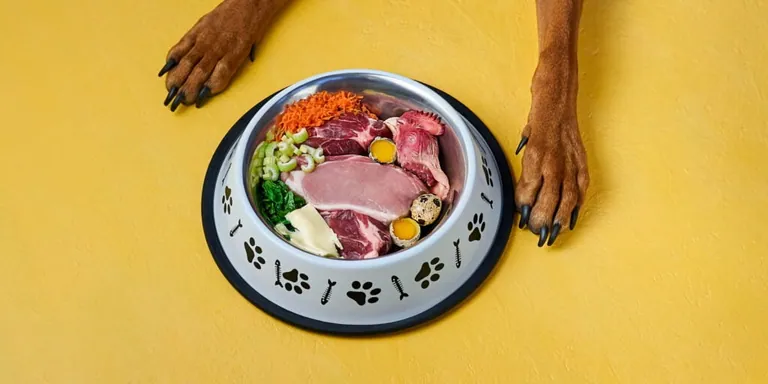
Colon bacteria ferment carbohydrates and fibre, and some ingredients produce far more gas than others. VCA names soy protein, soybean hulls, pea fibre, bran, beet pulp and high-fructose corn syrup among the usual suspects, and suggests rice-based carbohydrates as an easier alternative.
What matters more than any single ingredient is digestibility: a highly digestible, low-residue food leaves less behind for bacteria to work on.
Two corrections to advice this article used to give. Dogs are not universally unable to digest dairy — some tolerate small amounts of plain yogurt or cheese perfectly well, while others don’t, so judge your own dog. And “experiment with different foods” is the wrong instinct: every switch disrupts the gut, so change deliberately and one food at a time.
Whatever you choose, it should be complete and balanced for your dog’s life stage (FDA). Our guide to French Bulldog food covers reading the label.
Change food slowly
When you do switch, do it over about a week: roughly 25% new food on day 1, half and half by day 3, 75% by day 5, all new by day 7 (AKC). Watch for vomiting, diarrhea or a drop in appetite, and slow down if you see them.
Give any new food a couple of weeks before deciding whether it worked. Gut bacteria take time to settle, and judging after three days tells you nothing.
Walk after meals
A walk within about 30 minutes of eating encourages a bowel movement and may help move gas along (VCA). Keep it gentle — this is a stroll, not a game of fetch, and vigorous exercise straight after a meal isn’t a good idea for any dog.
When gas is a medical problem
Occasional wind is normal. Book a vet appointment if you notice:
- gas that arrives suddenly in a dog who never had it
- gas alongside weight loss or diarrhea, which warrants professional evaluation (VCA)
- blood in the stool, or straining
- a bloated, hard belly, or unproductive retching — that’s a possible emergency, not a gas problem
- itching, recurring ear infections or skin trouble alongside digestive signs
That last combination points at allergy rather than diet quality. French Bulldogs are among the breeds at increased risk of atopic dermatitis (Drechsler and colleagues, 2024), and food reactions are diagnosed with a proper elimination trial, which our guide to French Bulldog food allergies explains.
The short version
Slow the eating, split the meals, feed something digestible, change foods gradually, and walk gently afterwards. That fixes most of it. What’s left is the price of a flat-faced dog — and if the smell suddenly changes or arrives with other symptoms, it’s a vet visit rather than a window.