French Bulldog
Big Rope French Bulldogs: What the Rope Actually Is
"Big rope" is a marketing term for a heavier fold of skin above the nose. What it is, what it means for a dog that already struggles to breathe, and what it costs.
Table of contentsContents
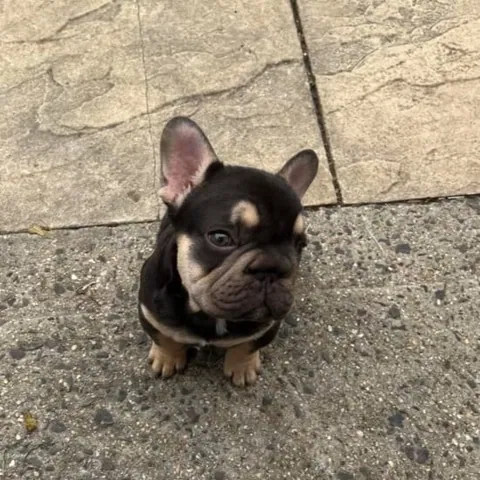
A “big rope” French Bulldog is a French Bulldog with a heavy fold of skin running across the top of the muzzle, above the nose. That fold is the rope. It isn’t a breed, a variety or a bloodline any kennel club recognizes, and there’s no such thing as a big rope registration: it’s a description breeders use, and increasingly a price tag.
That matters more than a cosmetic description usually would, because the fold sits just above the nostrils, and narrow nostrils are one of this breed’s central health problems.
What the breed standard says
The standard asks for “heavy wrinkles” rolled above a short nose, so a fold there is normal and expected (AKC breed standard). What it doesn’t do is ask for more of it. The standard sets no measure for the fold and gives no advantage to a heavier one, so the emphasis on rope size comes from outside the show ring.
What a heavier fold means for the dog
French Bulldogs are the most predisposed breed in the UK for a set of problems that all trace back to the shape of the face. In a study of 2,781 French Bulldogs against 21,850 other dogs, the breed’s odds were 42 times higher for narrowed nostrils, 31 times higher for brachycephalic obstructive airway syndrome, and 11 times higher for skin fold dermatitis (O’Neill and colleagues, 2021).
Those are the three the rope bears on directly:
- The nostrils. A heavy nose rope can rest over already-narrow nostrils, and the nose fold is one of the things surgeons remove or reduce when they operate on a flat-faced dog’s airway. Only about 10% of French Bulldogs score free of BOAS signs to begin with (Tomlinson and colleagues, 2024).
- The fold itself. A deep, damp, poorly ventilated crease is where fold dermatitis starts, and a bigger rope is a bigger crease.
- The face behind it. A dog bred for a more dramatic rope is usually also bred for a shorter, flatter face, because the two go together.
The researchers who produced those figures concluded that shifting the breed’s typical conformation towards a more moderate shape is the logical way to reduce health problems that are now widespread in it. Selecting for a heavier rope moves in the opposite direction.
A few claims worth correcting
Earlier versions of this article described the Big Rope line as “generally a healthy breed” and as calmer than other French Bulldogs, and explained the name by saying these dogs love playing with big ropes.
None of those hold up. The rope is the wrinkle rather than a toy, there’s no evidence that a heavier nose fold changes temperament, and no registry, breed club or study recognizes a distinct big rope line with its own health profile. A big rope Frenchie is a French Bulldog, with the breed’s usual temperament and the breed’s usual health considerations.
What it costs
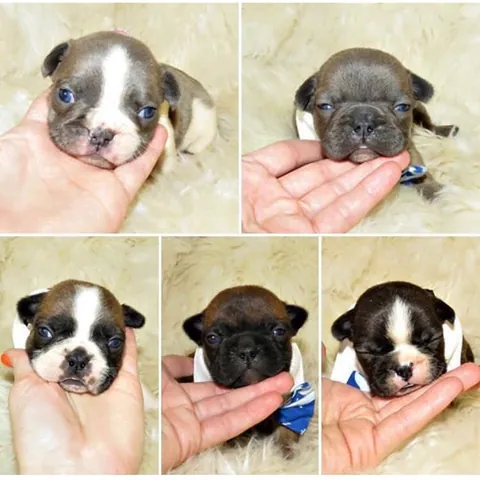
Advertised prices run from a little over $1,000 to $20,000 and beyond, rising with the rope, the colour and whatever else is being marketed that season. Those are asking prices, not a market rate; our price guide breaks down what a Frenchie actually costs to buy and keep.
You’ll also see very large sale figures quoted for individual stud dogs, and this article previously carried one at $750,000. We could find nothing to support it. The figures in circulation come from breeders and the sites that repeat them, they contradict each other, and none is independently documented, so they’re best read as advertising.

What isn’t in dispute is the running cost. This is a breed that needs insurance arranged early, before anything is diagnosed and therefore excluded, and airway surgery alone runs into four figures.
If you’re buying one anyway
Judge the dog in front of you rather than the label:
- Watch the parents breathe at rest, before any excitement. Noise at rest is the signal that matters, not noise after a run.
- Ask for BOAS grading from a recognized scheme, and for the result in writing. The Cambridge BOAS Research Group runs the best-known one.
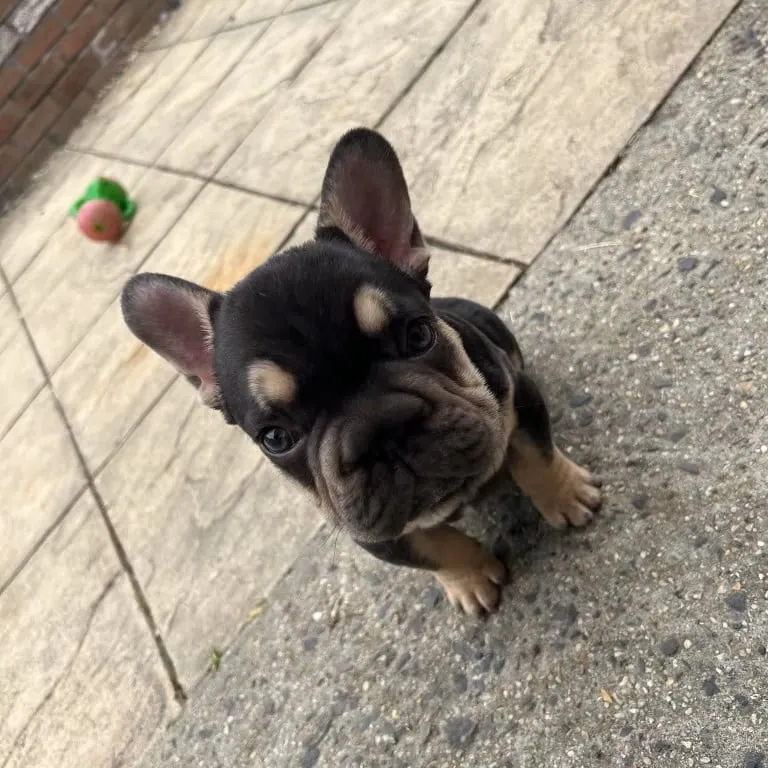
- Look under the rope. Lift the fold and check for redness, damp or smell. A breeder who hasn’t looked is telling you something.
- Ask what the nostrils look like open. Pinched nostrils in a puppy don’t widen with age.
- Be wary of any premium attached to the rope itself. Our breeder questions guide covers the rest.
If a breeder’s main selling point is the rope itself, it’s worth asking what else they’re selecting for, and what that means for the dog.
Living with one
Everything in our health issues guide applies, plus the fold:
- Clean and dry the rope as a routine, not a rescue job. Wipe it out, dry it properly, and check for redness. Our washing guide covers technique.
- Keep them lean. Weight makes breathing harder in a dog already short of airway; our weight guide covers body condition.
- Watch the heat. Flat-faced dogs overheat quickly and can’t cool themselves efficiently (PDSA). Walk in the cool part of the day.
- Take noisy breathing seriously. Snoring and snorting are not a breed charm; they’re signs worth a vet’s opinion, and BOAS surgery works better done earlier than later.
The short version
The rope is a fold of skin, “big rope” is a descriptive term rather than a breed, and a heavier fold sits above nostrils that are often already narrow. There’s no evidence it makes for a calmer or healthier dog, and researchers studying the breed favour more moderate conformation rather than more exaggeration. If you love the look, go in with your eyes open, insure early, and choose your breeder on how the parents breathe.