French Bulldog
Can You Take French Bulldogs on Long Walks?
Most French Bulldogs do best with short, regular walks. How much exercise they need, how to spot breathing trouble and heatstroke, and what to bring.
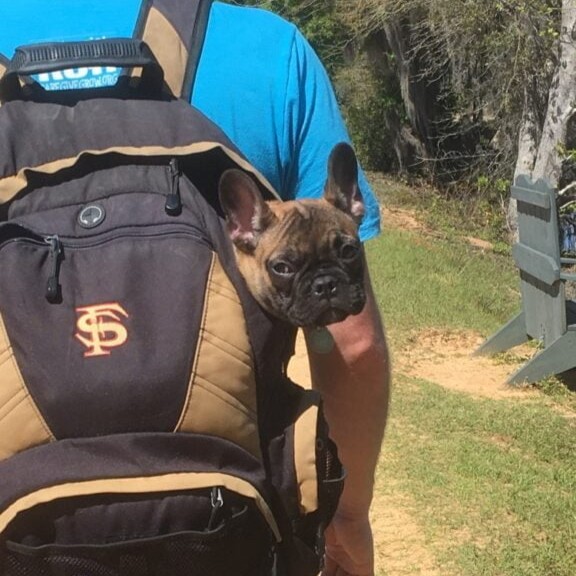
Table of contentsContents
Walks are good for a French Bulldog’s body and mind, but a Frenchie isn’t built for long hikes. Their flat faces make breathing harder work, especially in warm weather. Here’s how much walking a Frenchie needs, what to watch for and how to keep every walk safe.
How far can a French Bulldog walk?
Most French Bulldogs do better with a few short walks than one long one. PDSA recommends up to an hour of exercise a day, split into shorter walks with playtime (PDSA). For flat-faced dogs, a regular routine of steady exercise is better than strenuous outings (RSPCA).
How far your own dog can comfortably go depends on their age, fitness, weight and breathing, and on the weather. Start with short walks, build up gradually and let your Frenchie set the pace. On a longer day out, plan rest stops in the shade, and take a dog carrier backpack so you can carry them if they tire.
Games at home count toward their exercise too. Our guide to playing with your French Bulldog has ideas.
Watch their breathing
Many French Bulldogs have brachycephalic obstructive airway syndrome (BOAS), a breathing problem caused by the shape of their head and airways. Our guide to French Bulldog health issues explains it in more detail. Signs of BOAS include (PDSA):
- noisy breathing, including snuffling and snoring
- difficulty breathing
- excessive panting, even at rest
- being unable or unwilling to exercise
- struggling in hot weather
- collapse
If your Frenchie starts panting heavily on a walk, stop and let them rest, then head home slowly. If your dog develops sudden breathing problems, contact your vet immediately.
Two habits make walks easier on a Frenchie’s airway:
- Use a harness, not a collar. Pressure on the neck makes breathing more difficult (PDSA), and a body harness puts minimal pressure on delicate tissue (VCA Animal Hospitals). Our guide to the best harnesses for French Bulldogs compares options.
- Keep them at a healthy weight. Extra weight makes the narrowing of their airways worse, so ask your vet what your dog should weigh (PDSA).
Walking your French Bulldog in hot weather
French Bulldogs overheat easily. In a study of dogs under veterinary care in the UK, French Bulldogs had 6.49 times the odds of heat-related illness compared with Labrador Retrievers, and about 1 in 7 cases of heat-related illness in the study was fatal (Hall and colleagues, 2020). In flat-faced breeds, signs of heat stroke can appear when the temperature and humidity are only moderately high (VCA Animal Hospitals).
On warm days:
- Walk early in the morning or late in the evening, and avoid the midday sun (Royal Kennel Club).
- Keep walks short.
- Make sure your dog always has shade and water (PDSA).
- Walk on grass rather than pavement where you can.
- Test the ground first. Place the back of your hand on the pavement for seven seconds: if it’s too hot for your hand, it’s too hot for your dog’s paws.
- On hot days, skip the walk altogether (RSPCA) and play calm games somewhere cool indoors.
If your dog limps, whimpers or seems uncomfortable on a hot surface, get them off it quickly and contact your vet for advice (Royal Kennel Club).
For the other end of the year, see our winter tips for French Bulldogs.
Signs of heatstroke
Heatstroke is an emergency. Signs include (PDSA; VCA):
- heavy panting and fast or difficult breathing
- drooling or foaming at the mouth
- vomiting
- bright red or very pale gums, or dry, sticky gums
- tiredness or confusion
- seizures or unconsciousness
A body temperature above 103°F is abnormal in a dog, and temperatures above 106°F usually indicate heat stroke (VCA).
What to do if you suspect heatstroke
- Move your dog into the shade or somewhere cool indoors.
- Pour cool tap water over their body, avoiding their face, and put them in front of a fan or air conditioning if you can. Don’t use ice.
- Call your vet right away, and take your dog in as soon as possible, in an air-conditioned car if you have one.
Look after their paws and skin
French Bulldogs are among the breeds at increased risk of atopic dermatitis, an allergic skin disease (Drechsler and colleagues, 2024). The paws are one of the areas it affects most often, along with the face, ears, armpits and belly (Merck Veterinary Manual). Signs include ongoing itching, licking, reddish-brown saliva staining, red skin and recurring ear infections (VCA Animal Hospitals).
If your Frenchie’s paws look red or sore, or they keep licking them, see your vet. Treatment can include medication, medicated baths and omega fatty acid supplements (VCA). While their paws are sore, keep walks short and stick to soft ground.
What to bring on walks
A few basics make any walk easier:
- a well-fitted harness and leash
- water and a bowl your dog can drink from
- poop bags
Enjoy your walks together
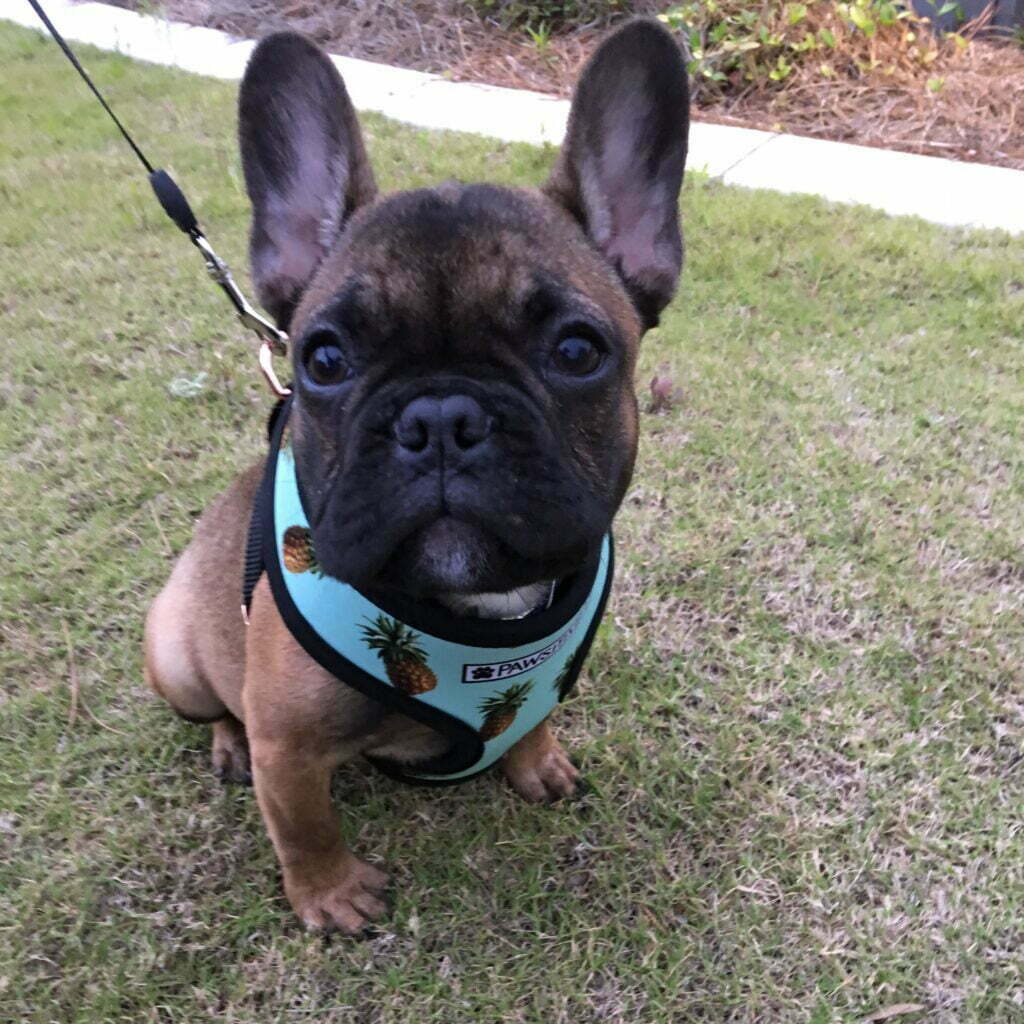
A French Bulldog can enjoy walks their whole life. Keep them short and steady, go out at cool times of day, use a harness and watch their breathing. If you’re worried about your dog’s breathing or stamina, talk to your vet.
Frequently asked questions
Can French Bulldogs go on long walks?
Most do better with several short walks than one long one. PDSA recommends up to an hour of exercise a day, split into shorter walks with playtime. Build up gradually, rest often and avoid warm weather.
Should a French Bulldog wear a harness or a collar?
A harness. Pressure from a collar on a flat-faced dog’s neck makes breathing more difficult.
How hot is too hot to walk a French Bulldog?
There’s no single safe temperature. Flat-faced dogs can overheat when it’s only moderately warm and humid. Walk early or late in the day, keep walks short, and test pavement with the back of your hand for seven seconds before you set off.
What are the signs of heatstroke in a French Bulldog?
Heavy panting, fast or difficult breathing, drooling, vomiting, and bright red or very pale gums, with seizures or unconsciousness in severe cases. Move your dog somewhere cool, pour cool water over their body and call your vet right away.