
Dog Training
Is Your French Bulldog Stubborn, or Just Unmotivated?
Why French Bulldogs look stubborn, what reward-based training actually involves, and how to handle the sticking points: recall, leash manners, jumping and holding a sit.

Table of contentsContents
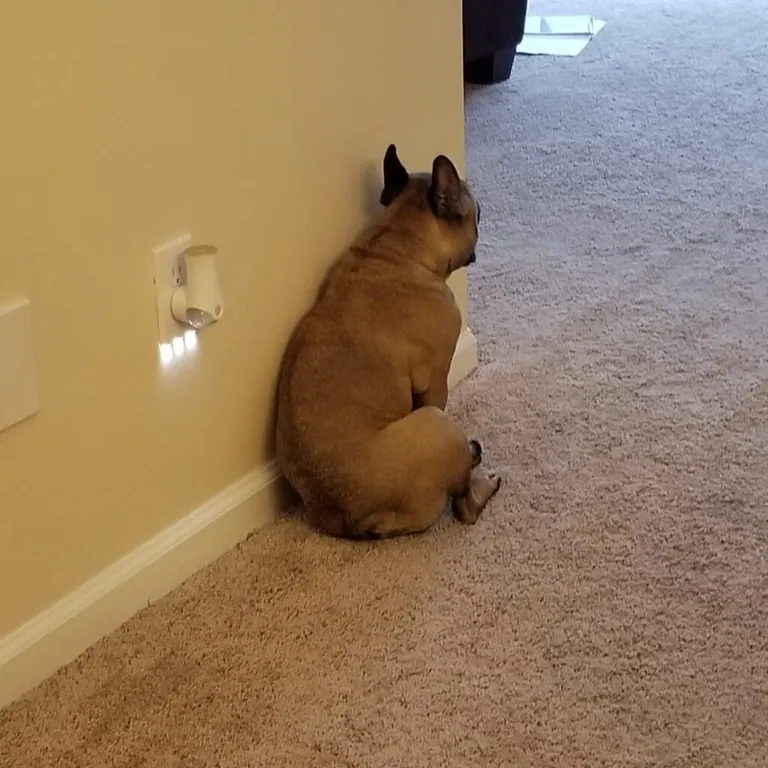
French Bulldogs have a reputation for being stubborn. What’s usually happening is simpler: the dog doesn’t yet understand what you want, isn’t being paid enough to bother, or physically can’t keep going.
That reframe matters, because “stubborn” leads people toward force, and force is the one approach the evidence rules out.
Where the reputation comes from
Frenchies were bred as companions, not as working dogs taking direction at distance. Their ancestors were small bulldogs kept by Nottingham lace workers, who took them to Normandy when the lace trade moved; American fanciers later standardized the bat ears (AKC).
So you have a dog bred to be with people rather than to take instruction, who is also short-faced enough to tire quickly. Add a training session that runs too long in a warm room and you get a dog who lies down and stops responding. That looks like defiance and isn’t.
Train with rewards, not authority
The veterinary position is unambiguous. Reward-based methods offer the most advantages and least harm, and methods that rely on force, pain, or emotional or physical discomfort “should not be used in canine training or for the treatment of behavioral disorders” (AVSAB).
It isn’t only a welfare argument. Dogs trained with aversive methods show stress behaviours during training and higher rates of behaviour problems afterwards, while reward-trained dogs show better obedience and more attention to their owner. Aversive training has also been shown to impair a dog’s ability to learn new tasks.
Earlier versions of this article recommended “firm body language” and teaching your Frenchie to “respect your authority”. That advice is gone.
What actually works
Pay properly. A Frenchie will work hard for something genuinely good. Keep treats small and count them: treats should stay within about 10% of daily calories (VCA Animal Hospitals), which for a 25-pound dog is not much, so use tiny pieces and subtract them from dinner.
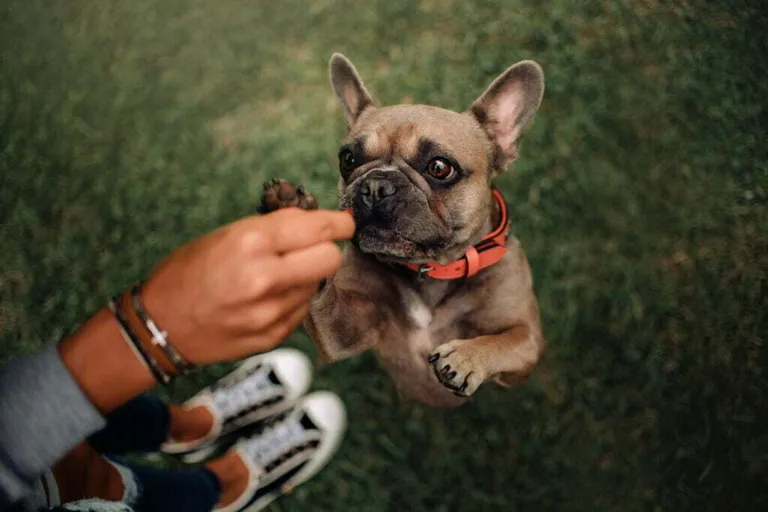
Keep sessions short. Three to five minutes, several times a day, beats one long session. Stop while your dog is still winning.
Watch the breathing, not the clock. If your Frenchie starts panting hard, gets noisy, or slows down, the session is over. Flat-faced dogs overheat and tire quickly, and pushing through is how training becomes something your dog avoids (PDSA).
Be consistent about the word and the criteria. One cue, one meaning, everyone in the house using it the same way.
Make the right answer easy. Manage the environment so your dog can’t rehearse the wrong thing: gates, leads indoors, and putting temptation away.
The usual sticking points
Recall
The most common recall problem is that coming back reliably ends the fun. Reward heavily, sometimes release your dog again straight afterwards, and never call your dog to do something they dislike — go and get them instead.
Leash pulling
A Frenchie should walk on a harness rather than a collar, because pressure on the neck makes breathing harder. Which type suits your dog, and how to fit it, is covered in our harness guide.
The training half is simple and slow: the leash stays loose or you stop walking. Reward every check-in.
Jumping up
Ignore the jump, reward four feet on the floor, and ask visitors to do the same. Frenchies are small enough that people encourage jumping without meaning to.
Refusing to move on walks
Sometimes a training problem, often a physical one. Check for heat, tiredness, sore paws or a harness rubbing before assuming stubbornness.
Socialization does more than obedience
A dog who is comfortable in the world has far fewer training problems. Introduce your puppy to people, surfaces, noises and calm, healthy dogs gradually and positively, and let them retreat when they want to. Our guide to playing with your French Bulldog covers getting the good kind of tired.
Calming products: what the evidence says
Pressure wraps are popular for anxious or over-aroused dogs. The evidence is thin: a systematic review found only four studies of variable quality, with some suggestion of benefit for thunderstorm phobia and separation anxiety (Grigg and colleagues, 2024). They appear safe, so trying one is reasonable — just don’t expect it to substitute for training.
If your dog’s problem is distress at being left rather than training, that’s a different thing entirely, and crating an anxious dog can make it worse (VCA Animal Hospitals). Our separation anxiety guide covers it.
When to get help
A dog who freezes, growls, snaps or panics needs a professional rather than more repetitions — ask your vet to rule out pain and refer you to a qualified behaviourist. Sudden “stubbornness” in a dog who was previously willing is also worth a check-up; reluctance to move, sit or climb stairs is often orthopaedic or spinal, which our health issues guide covers.
The short version
Your Frenchie isn’t defying you. Pay well, keep it short, stop before they tire, stay consistent, and set the environment up so the right answer is the easy one. That handles most of what gets called stubbornness — and the rest is usually a dog telling you something physical is wrong.