Dog Breeds
Everything You Need to Know About The Doberman Lab Mix
The Doberdor is a cross of Doberman and Labrador weighing 60 to 100 pounds. What to expect on looks, temperament, grooming, training and the health problems worth knowing about.
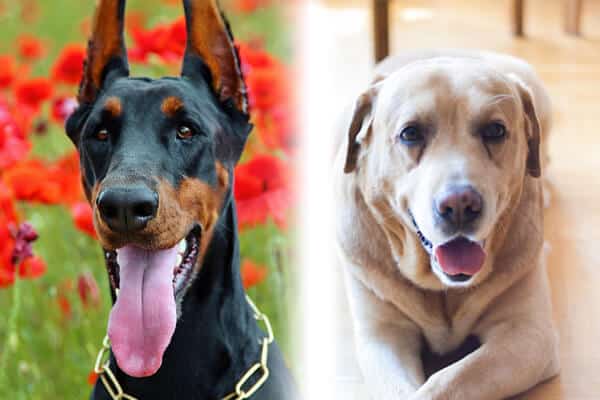
Table of contentsContents
Haven’t heard of the Doberdor before? Let me introduce you.
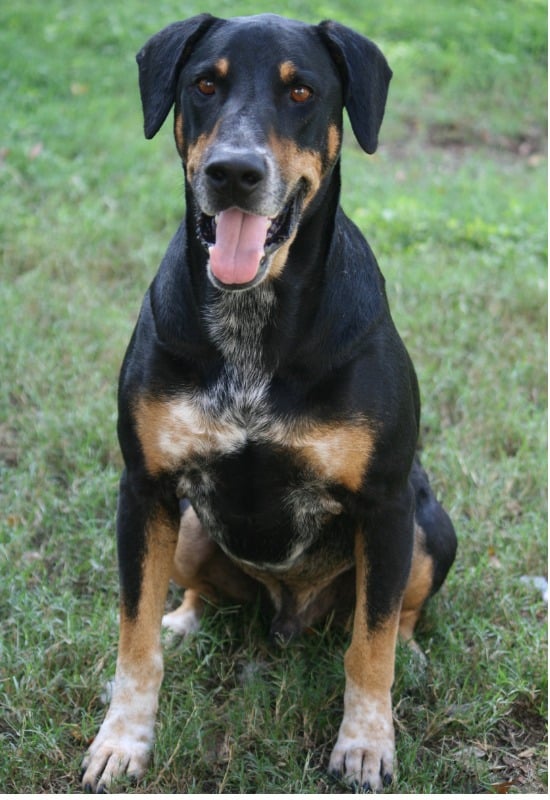
The Doberdor is a mix between a Doberman and a Labrador Retriever, also called the Doberman Lab Mix. It’s a big dog, and to my eye it usually favours its Doberman parent. The pup may inherit either the solid colouring of its Lab side or the markings of the Doberman.
So if you’re thinking about bringing one home, do your homework first. Knowing what you’re getting into is most of the job.
Here’s what to expect from a Doberman and Lab mix.
What Does It Look Like? (Superficial, much?)
Both parents are similar in size, so it’s safe to assume your puppy will grow into a large dog. But a Doberman and a Labrador look nothing alike, which makes the rest harder to predict.
Chances are your Doberdor will favour one parent over the other. So it’s worth knowing what each side brings.
Labradors come in three colours: golden, chocolate and black. Doberman Pinschers carry a pattern — black and tan, or chocolate and fawn. A Doberdor pup may inherit the solid colour of the Labrador, the markings of a Doberman, or some combination of the two.
Size is more predictable. Both parents are large dogs, so the Doberdor has a big, solid frame. Expect folded ears and a long, thick, strong tail.
There’s one more inheritance worth mentioning. Labradors are water retrievers with webbed feet, which is what makes them such strong swimmers, and your Doberdor may well inherit that too.
The Doberman Lab mix lifespan runs from 10 to 14 years, though that depends a great deal on how well the dog is looked after.
As for weight, a Doberman Lab mix typically lands between 60 and 100 pounds. This is a heavy dog.
Basic Behavior Traits: What Am I Getting Into?
A dog needs to suit your lifestyle as well as your preferences, and taking one on is a serious commitment.
Because the Doberdor is a mixed breed, it inherits from both sides. Temperament is hard to predict with any confidence, but these dogs tend to be loyal, affectionate, alert and sociable, and they make good watchdogs.
Here’s what usually comes through.
Loving and Loyal
Doberdors are among the more affectionate crosses you’ll meet, and they have a great deal of attention to give. That comes from the Labrador side.
Intelligent
Both parent breeds are bright, and the Doberdor is no exception. Yours should train easily and pick up new things quickly.
Independence and Stubbornness
The flip side of an intelligent dog is that it has a mind of its own, and the Doberdor can be stubborn with it. Positive reinforcement is the way through this — it plays to the dog’s affectionate side, where correction tends to backfire.
Family Dog
This one has earned the velcro dog label, because it attaches itself hard to its family. Your dog will want attention and will want to be wherever you are.
Protective
The protective instinct comes from the Doberman side and it is strong. Training matters here more than with most crosses.
How often will I be taking it to the Groomers? And What About Walks?
Grooming first, and it’s the trickier of the two to pin down.
Grooming Needs: All About Doberdor’s Bath Time!
Because the Lab and the Doberman have such different coats, your Doberdor’s grooming needs depend entirely on which coat it inherits.
So it’s worth looking at both.
Doberman Pinschers
They hardly ever need grooming. The coat is fine and short, and a thorough rubdown with a damp cloth about once a month is enough. They only need bathing occasionally.
They’re also minimal shedders, which is about as low-maintenance as a dog gets.
Labrador Retrievers
Labs are higher maintenance, mainly because of the double-layer coat.
They shed, so you’ll be brushing once or twice a week. I use the Pet Portal Brush on mine.
Labs also have a naturally oily coat, which means more baths than the Doberman side would need. Use something mild — the Earthbath Oatmeal & Aloe Shampoo is soap-free and pH-balanced, and the oatmeal helps with the dry, itchy skin that frequent washing can bring on.
So a Doberdor puppy could land anywhere between ultra low maintenance and genuinely demanding, depending on the coat it draws.
Walkies!
The Doberdor is an active dog and needs walking at least twice a day. They love it, and the longer the walk the better.
Given the size and the strength, a decent leash is worth the money. I use the Leashboss Original — it’s a double-handle lead, so there’s a second grip near the collar for moments when you need close control at a kerb or passing another dog. On a dog this heavy that second handle earns its keep.
The Doberman Lab mix also loves to swim, which makes the Doberdor a very good outdoor companion.
Can they be trained?
Yes, and more easily than most.
Both parent breeds are intelligent and trainable, so the Doberdor comes by it honestly.
A Doberdor pup grasps new things quickly and is an enthusiastic learner, but be patient. Keep the sessions fun and keep them short — ten to fifteen minutes, a few times a day, works far better than one long slog.
Lean on positive reinforcement. This dog will do a great deal for praise.
But, What to Feed?
Mealtime is the highlight of my dog’s day. He would eat more or less anything put in front of him.
So what should a Doberdor be eating?
The useful thing about mixed breeds is that they can eat what either parent eats. This is an active dog with a big frame, so it needs a substantial diet — around 2 to 3 cups of dry food a day, split across meals.
Two I’d point you at: Royal Canin Labrador Retriever Adult and Rachael Ray Nutrish Zero Grain.
Do I need to look out for any Medical Concerns?
A few conditions turn up more often in the Doberman Lab Mix than you’d like.
● Hip Dysplasia
Hip dysplasia is a malformation of the ball-and-socket joint in the hip.
In practice that means the ball and the socket don’t meet cleanly, so the joint grinds instead of gliding. It’s painful, and it’s common in large breeds.
● Elbow Dysplasia
Elbow dysplasia is a genetic condition caused by abnormal growth of cells, tissue or bone in the joint. It shows up as elbow pain and lameness, often before the dog is fully grown.
● Eye conditions
Both parent breeds carry some hereditary eye trouble, so it’s worth asking a breeder what they screen for.
A word on the “hybrid vigour” idea you’ll see repeated online: crossing two breeds widens the gene pool, but it does not cancel out what either side carries. A Doberdor can inherit hip dysplasia from both parents. Ask about health testing rather than assuming the cross has solved it.
What does all this mean?
Here’s the short version.
The Doberdor is a loving, protective family dog that wants long walks and plenty of company. They’re intelligent and quick to learn, which makes training straightforward if you put the time in.
This is a large breed. They won’t thrive in a small flat, and they will make excellent use of a house with a yard.
A few things worth keeping in mind:
● They need a substantial, good-quality diet — the Royal Canin Labrador Retriever Adult and Rachael Ray Nutrish Zero Grain are both solid choices.
● Watch for hip dysplasia, elbow dysplasia and eye problems, and ask any breeder what they test for.
● Shedding is a lottery. It depends entirely on the coat they inherit.
Hopefully that clears up what to expect from a Doberman Lab mix. Leave a comment below if you’ve got questions.
PetDT Editorial Team
The PetDT Editorial Team manages and maintains our library of legacy pet care content. With experience across a wide range of pets, including dogs, cats, fish, hamsters, and reptiles, the team works to review and improve older articles so they remain accurate, clear, and helpful for everyday pet owners. As PetDT continues updating inherited content, articles credited to the Editorial Team will be reviewed by Mike or Melissa during the update process.
View all posts by PetDT Editorial Team