French Bulldog
French Bulldog Colors: Standard, Rare and Disqualified Colors (With Pictures)
The French Bulldog colors and patterns accepted by the breed standard, the non-standard colors sold as rare, and the health issues linked to some of them.

Table of contentsContents
French Bulldogs come in a surprising range of colors, but only some of them are part of the breed standard. Others are sold as “rare,” and a few of those come with health concerns worth understanding before you choose a puppy.
Whatever their color, Frenchies share the same look: a large, square head, a compact and muscular body, and a short, smooth, shiny coat. Their skin is soft and loose, especially around the head and shoulders, where it forms wrinkles.
French Bulldog colors in the AKC breed standard
The current AKC breed standard, which took effect in 2018, accepts three colors: white, cream and fawn, in shades from light fawn to red fawn, plus any combination of them (AKC breed standard). On top of those colors, the standard accepts these patterns and markings:
- brindle
- piebald
- black masks
- black shadings
- white markings
Ticking, small flecks of color, is acceptable but not desirable.
Fawn
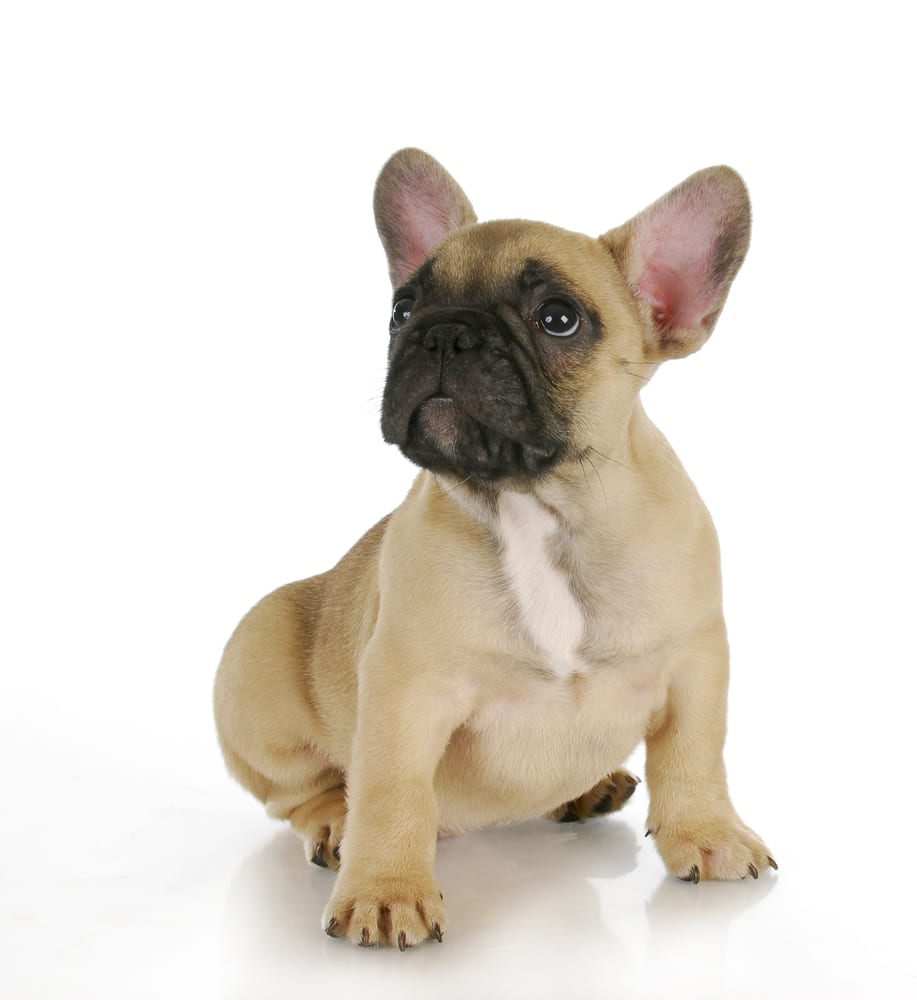
Fawn ranges from light fawn to a rich red fawn. Many fawn Frenchies have a black mask around the muzzle and eyes, which the standard accepts, and some have white markings, often on the chest. A fawn can also be brindle (black striping over the fawn) or piebald (mostly white with fawn patches).
White

White is one of the three accepted colors. White is also the main color in the piebald pattern, where a mostly white coat has patches of another color. The dog pictured has one blue eye, which, as the section on eyes below explains, the standard lists as a disqualification.
Brindle
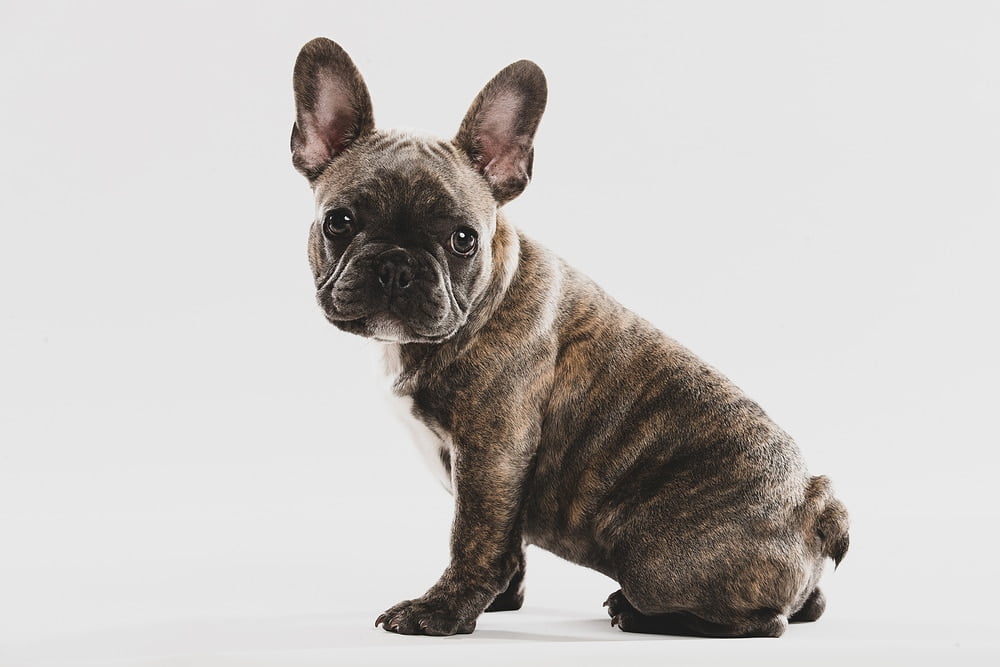
Brindle is a pattern of black stripes on a fawn background. It ranges from sparse but clearly defined stripes to striping so heavy that the fawn barely shows through, known as “black brindle.” A brindle Frenchie can also have white markings, or be a brindle piebald, with brindle patches on a mostly white coat.
Cream
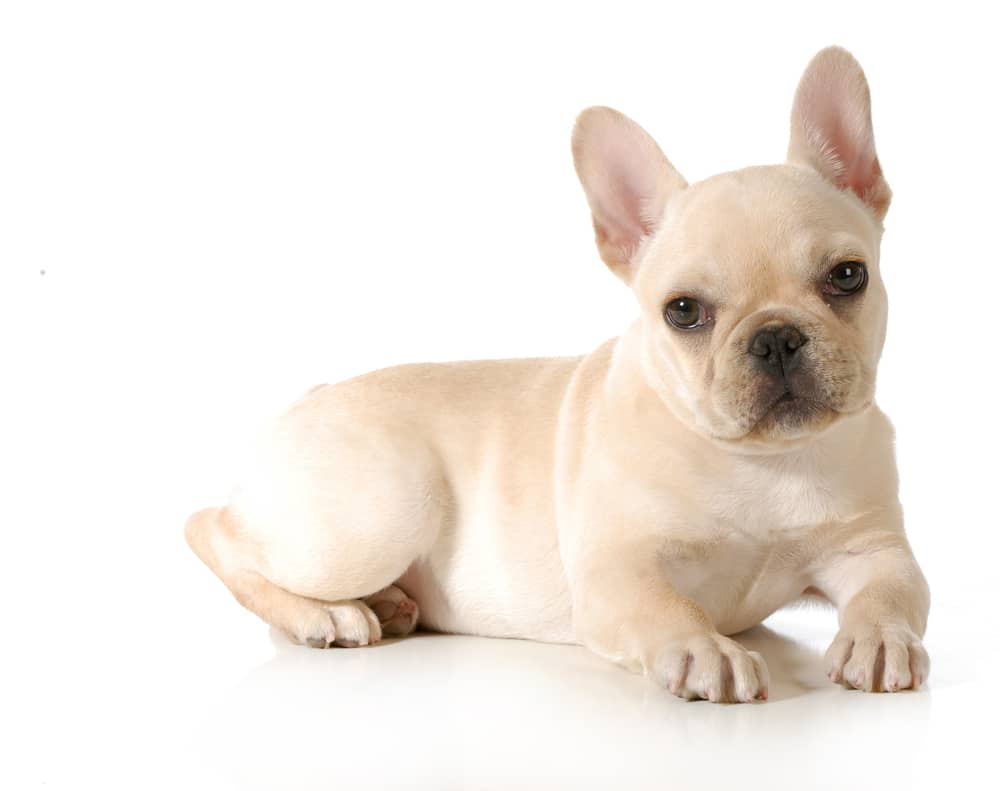
Cream is a pale, even color, lighter than fawn. Cream and fawn Frenchies without a black mask may have a lighter-colored nose, which the standard accepts but doesn’t prefer. Every other French Bulldog should have a black nose.
Eye color
The standard calls for dark eyes, brown or close to black. Lighter brown eyes are acceptable but not desirable, and blue or green eyes, or any trace of blue or green, are a disqualification.
Colors outside the breed standard
The standard disqualifies every color, marking or pattern it doesn’t describe. It names solid black, black and tan, black and white, white and black, blue, blue fawn, liver and merle as examples. (Black here means black without a trace of brindle, so a heavily striped “black brindle” is still accepted.)
Breeders also advertise other non-standard colors, including chocolate, Isabella or lilac, sable, blue and tan, and blue brindle (French Bulldog Rescue Network). Some French Bulldogs have a brown color called cocoa, caused by a variant of a gene called HPS3 and inherited recessively (Kiener and colleagues, 2020).
For a closer look at the most popular of these colors, see our guide to blue French Bulldogs.
Why non-standard colors are controversial
The French Bull Dog Club of America calls these “fad colors.” It says those who intentionally breed disqualified colors are motivated only by money, and that marketing the colors as rare lets them charge very inflated prices. In the club’s words, “no responsible breeder would breed against their breed standard” (FBDCA).
When you’re choosing a breeder, it helps to know which questions to ask, so you can find a puppy that has been bred carefully.
Is it okay to get a rare-colored Frenchie?
A rare-colored French Bulldog can still be a loving pet, and not every one is badly bred. But some colors are linked to specific health problems:
- Dilute colors, such as blue, blue fawn and lilac, are linked to color dilution alopecia, an inherited condition that causes thinning hair or hair loss and skin problems, usually on the back and body. It can’t be cured, only managed (VCA Animal Hospitals).
- Merle carries an increased risk of impaired hearing and sight, particularly in dogs with two copies of the gene (Royal Kennel Club). The French Bulldog Rescue Network says merle doesn’t exist in the purebred French Bulldog gene pool and is produced by crossing in another breed, usually a Chihuahua.
- Cocoa hasn’t been studied for health effects yet. Variants in the same gene cause Hermansky–Pudlak syndrome in people, which involves albinism and a bleeding disorder. The researchers who identified the cocoa variant say further studies are urgently needed, and that cocoa dogs should only be bred if they have no clinically relevant impairments.
If a rare color still appeals to you, look especially hard for a responsible breeder, ask about the parents’ health testing, and check the puppy’s coat, eyes and hearing. Budget for vet care and consider pet insurance, as you would for any Frenchie.
French Bulldog colors and what they mean
All coat colors come from just two pigments: eumelanin, which is black, and phaeomelanin, which is red (VCA). A handful of genes then change how those pigments appear:
- Dilution lightens black or brown pigment to gray, blue or pale brown when a dog inherits two copies of the recessive gene. That’s where blue and lilac come from.
- The brown gene turns black pigment to brown or liver, again only with two copies.
- Merle creates irregular patches of diluted and full color, and only affects black pigment.
- The K locus controls dominant black, brindle and fawn.
White in the coat also matters for hearing. Congenital deafness in dogs is linked mainly to the piebald and merle genes, and white in the coat increases the likelihood of deafness (OFA). In several breeds, dogs with blue eyes are statistically more likely to be deaf, but blue eyes alone don’t mean a dog is deaf. If you’re unsure about a puppy’s hearing, a vet can arrange a BAER hearing test once the puppy is at least 35 days old.
What color Frenchie is best?
Everyone has a favorite, and there’s no wrong answer among the standard colors. Fawn, cream, white and brindle, in all their combinations, are the colors responsible breeders work with. A puppy’s health and the care that went into their breeding matter far more than their color.
Maintaining a Frenchie’s coat
Every French Bulldog’s coat is easy to care for. They aren’t known for shedding lots, so a weekly brush is usually enough (PDSA). They also need regular nail trims and cleaning of the ears and facial folds (French Bull Dog Club of America).
- Bathe your Frenchie when they need it, using a dog shampoo. For dry, itchy skin, an oatmeal formula such as Wahl’s Dry Skin & Itch Relief shampoo is one option.
- Clean your dog’s facial folds between baths, avoiding the eyes.
- Dry your Frenchie well after every bath, paying special attention to the facial folds.
- While you brush, check the skin for redness, flaking or thinning patches.
For step-by-step advice, see our guide to washing and caring for your French Bulldog’s coat.
In conclusion
French Bulldogs come in plenty of appealing shades within the breed standard: fawn, cream and white, with brindle, piebald, masks and white markings adding even more variety. Colors outside the standard are often sold as rare, but some carry health risks that are worth taking seriously.
Whatever color you choose, buy or adopt carefully and look after their coat and skin, and you’ll have a healthy, happy Frenchie.