Dog Health
Why Does My Dog Sit on Me: 7 Reasons to Help You Understand


Table of contentsContents
Dogs of all sizes can see themselves as lap dogs. In many cases of dogs sitting on people, size is no issue – at least in the mind of the dog.
Big dogs and small ones alike don’t discriminate when it comes to sitting on you (or standing on you, for that matter).
Anyone with a large-breed dog knows that they don’t understand how big they really are.
Little dogs are just as likely to set up residence in your lap, sometimes refusing to move until they absolutely have to.
So just, why do they do it?
What does it mean when your dog lays on you?
It’s a good thing!
Prepare to be flattered because dogs usually lay or sit on the people who they love – and trust – the most.
The “why” part of the question has a lot of answers, from cute to a little gross.
We’ll help you figure out why your dog sits on you, whether it’s all the time or just on occasion.
Dogs Sit on You for Attention
Dogs need attention just like we do. Getting in your lap can be their way of saying, “Hey, remember me? I’m still here!”
It may not be a lack of attention from you.
We’re not accusing anyone of neglecting their dogs. We know from experience that some of them are gluttons for attention.
You could have just spent an hour walking them, playing with them, brushing them, or petting them, and there they are two minutes later – crawling into your lap.
Usually, this is a sweet, innocent action, and there’s no harm in indulging them.
Be aware:
In some cases, their need for extra attention could stem from a few things that need to be addressed.
Separation Anxiety
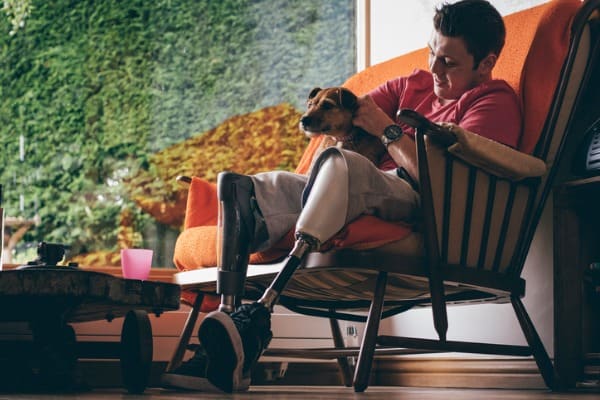
Your dog might not be willing to leave your lap because it’s the best way for them to monitor you.
They want to be the first to know if you’re going somewhere.
When does this become a problem?
Some dogs suffer from separation anxiety, which can lead to a lot of issues.
First of all, no one wants their pet to be distressed every time they have to be left alone.
Secondly, separation anxiety can manifest itself in some very unacceptable and destructive behaviors.
Look out for this:
You might be dealing with a dog who chews furniture, walls, and carpet, or tears up grass frantically when outside.
Or, they could scatter trash or your belongings when left alone too long.
Dogs with separation anxiety can be known to howl or bark incessantly, which is an issue if you have neighbors.
How does this tie in with a dog sitting on your lap?
If your dog seems very reluctant to leave your lap, follows you closely, or becomes distressed when they can’t be in your lap, their love for cuddling could be more like an obsession. It’s one of the ways a nervous dog calms itself.
You want your dog to feel safe in your lap, of course.
Unhealthy lap sitting
What you don’t want is for your dog to be relaxed only when they can be in your lap.
It is not healthy behavior for a dog to be so clingy that they become anxious if they aren’t glued to your side.
If you ask yourself, why does my dog sit on me all the time – you should evaluate their other behaviors and look for signs of separation anxiety.
Time to take action:
In this case, it would not be as mean as it might sound to limit your dog’s lap time.
During the time you would normally have them in your lap, have them sit in their bed or somewhere nearby where they can still see you.
It will teach them that they don’t have to be in your lap, standing guard, 24/7.
Let them see that you’re not going anywhere just because they aren’t in your lap.
Be patient:
It takes more to help treat a dog with separation anxiety.
Once they can adjust to not being attached at the hip, they are more easygoing about laying in places other than your lap.
Jealousy
The results are in – dogs can experience some basic forms of jealousy.
Sitting in your lap could be their way of letting you know they don’t like the attention you’re giving to another human or pet.
They’re also putting themselves in a position where it’s difficult to ignore them.
Like separation anxiety, this behavior can seem cute on the surface, but it’s something you don’t want to encourage.
Some dogs can experience mild jealousy without it ever becoming a problem.
When jealous behavior needs addressing
However, failing to discourage it can leave the door open for their jealousy to develop into a bigger issue.
For example:
If you have a new baby in the house, your dog could try to sit on you – while you’re holding the baby.
If the new baby is a four-legged one, your dog could try to sit on you as a way to separate you from the puppy.
Dogs who try to sit on their humans when they are holding something – like a puppy – might also use their nose to try to root the puppy away from the human.
This is, of course, unacceptable behavior, but the dog needs to understand they aren’t being replaced.
It’s on you – the pet parent – to split the attention fairly and allow your dog time to adjust.
Babies – both human and canine – aren’t the only ones your dog might become jealous of. It could be another adult dog, a cat, or your spouse.
The same rules stand here because a jealousy issue can grow into an aggression issue if the behavior is allowed.
Jealous dogs might try to worm their way into your lap, but aggressively jealous dogs could snap at people who try to move them or get too near you.
Don’t let a jealous dog push the line with this type of behavior.
Letting them continue to sit in your lap is fine – but only when it’s their turn.
Is Your Dog Sitting on You Just for Cuddles?
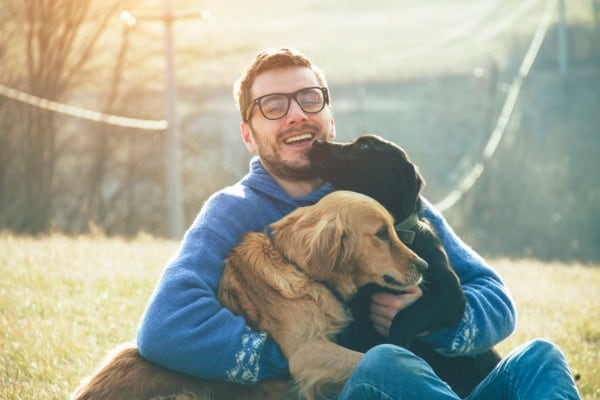
Do you wonder, if they’re not jealous or anxious, why does my dog lay on me?
The answer is simple – they need a good cuddle.
Dogs wanting to cuddle doesn’t have to stem from anxiety or boundary issues.
It’s normal and natural for them to want to be close to their people – they’re pack animals and thrive when they’re with those closest to them.
If you have multiple dogs, you might find yourself in the middle of a dog pile anytime you sit down.
Dog sit, lay, and even stand on you. You can learn more about why your dog stands on you sometimes as well.
Rest assured, this is perfectly acceptable, provided everyone gets along – and don’t raise a stink if you move them.
What are the common reasons for dogs wanting to cuddle?
They Love You
The simplest explanation is your dog chooses to sit or lay on you because they want to be close to you. They like your company.
This is one of the ways a dog can say, “I love you.”
Dogs also might use you as a headrest while lying near you, resting their body weight on you while they sit in your lap.
It’s a sign of respect:
A dog wouldn’t do this if they didn’t fully trust you and feel secure in your presence. Consider it a high compliment.
They could have another motive for lying on you while you sleep, which is another testament to their love.
Of course, if you find your dog sleeps on you and not your husband all the time, that’s a behavior worth looking into.
They want to be there to protect you if need be.
They’re Cold
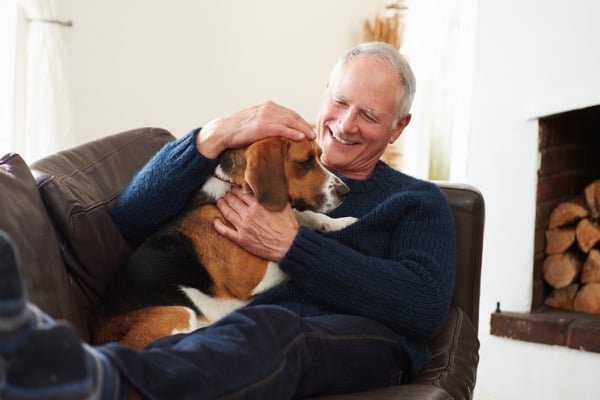
If it’s a cold, wintry day, don’t be surprised if your dog seems to be spending more time in your lap.
You might even have the other problem of your dog nestling in and sitting behind you on the couch!
Dogs will cuddle together to keep warm – often curled up in a ball.
They seek the same mutually beneficial arrangement with humans, especially when it’s particularly frigid.
It’s in Their Nature to Sit on You
Some dogs are bred as companion animals – think lap dogs such as Yorkies, Toy Poodles, or even larger dogs like Cocker Spaniels.
Dogs smaller in size will often prefer being in someone’s lap because it feels safer.
Imagine seeing the world from the eyes of a Chihuahua – it would be a constant dance of avoiding being stepped on or sat on.
People tend to rest higher than floor level, like on couches or beds.
For a tiny dog, your lap is a much safer bet than a dog bed on the floor, where everything is towering over them.
Even if you’re sitting on the floor, a small dog might prefer the protection your lap offers them.
They could be cold:
Small dogs also tend to get cold easier than larger dogs, so add that to the list of reasons sitting on you is their preferred method of relaxing.
Having said that, there are plenty of large – or downright giant – dogs who love being in people’s laps every bit as much as toy breeds.
Some dogs have it in their nature to be lap dogs, not because they are small, but because they are social and close to their people.
If you have a large breed dog, you’re probably no stranger to being flattened by a big behind.
Being smushed by a bundle of fur can be surprisingly comforting, though, and many parents of big dogs welcome it.
Sneaky Things Your Dog Might do Sitting in Your Lap
Now, onto the gross and weird stuff.
These reasons for your dog sitting in your lap might not be a regular occurrence, but they’re something you should look out for.
Marking Their Scent
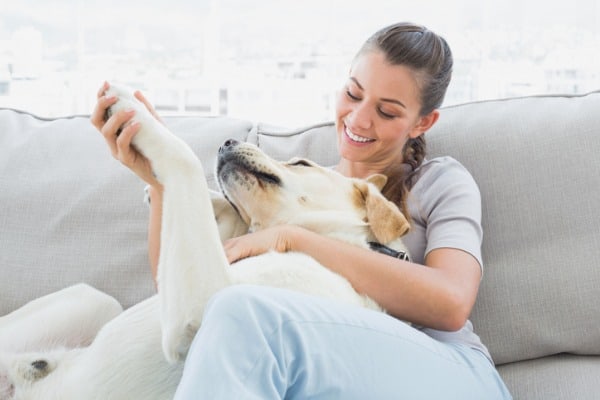
A dog might sit on you to make sure you smell like they do – which isn’t a huge issue if you’re already okay with a dog in your lap.
This is more for the benefit of other dogs. It’s not your dog trying to be alpha, but more like your dog, making sure other dogs know you’re “taken.”
Sitting on you and then rolling and rubbing their head or rump on you is a giveaway they’re trying to make sure you have their scent all over.
Think about this:
You might notice this behavior if you’ve been around other dogs recently.
Your dog can smell other dogs on you, and they’re trying to “reclaim” you.
Scooting
You know the behavior we’re talking about here, and it’s not something you want your dog doing anywhere in the house.
You definitely don’t want them to do it on you.
Why do dogs scoot?
They’re usually scooting to try to relieve anal gland discharge.
They could also scoot because of parasites or after a bout of dog diarrhea.
Doing it on the carpet is bad enough, but it’s crossing the line if they try to scoot on your lap.
If you busted your dog scooting inside, it’s best to take them out if they decide to continue. Outside, a dog will “take care” of the issue by licking their butt.
If you have just witnessed a dog scooting, let them sit in your lap at your own risk.
Scratching
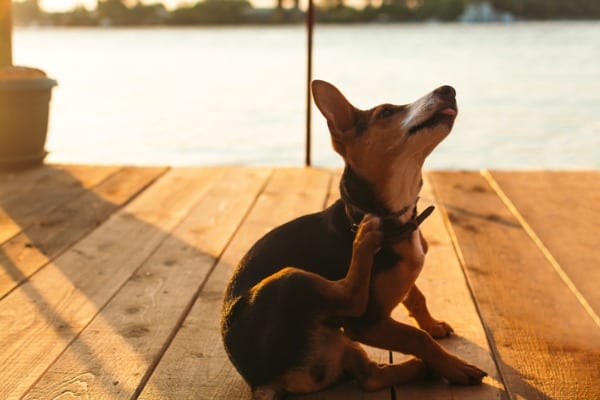
An itchy dog might sit in your lap so they can use you to scratch themselves.
Similar to marking their scent, they could try to rub their back on you or wipe their head, face, or ears over you.
No one likes having an itch they can’t reach, but that doesn’t mean you have to be a human scratching post.
If your dog is suffering from a skin condition or allergies, scratching could actually make things worse in the long run.
Your dog might just have a random itch, just like humans get sometimes.
If they seem to be trying to scratch themselves on you, offer them a helping hand (or brush) to relieve the itch.
Safe Space = Your Lap
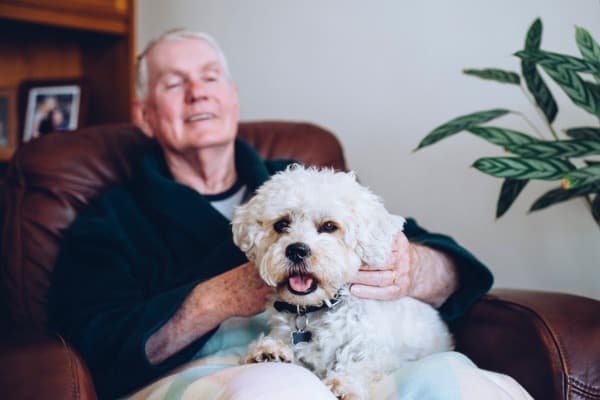
You might wonder: is my dog on my lap just cuddling me?
The answer?
That is the most likely reason your dog likes to be in your lap.
Your warmth, company, and security are more than that of anyone or anything else in the house.
Keep in mind:
There are a few cases where you’ll want to keep an eye on the dog in your lap.
A dog who becomes anxious when you move them, for example, needs some behavior therapy for separation anxiety.
A dog who is overprotective or aggressive while in your lap needs similar behavior therapy and no lap privileges until they understand the rules better.
For the most part, a dog is in your lap simply because they love and trust you.
Watch out for that butt, though.
PetDT Editorial Team
The PetDT Editorial Team manages and maintains our library of legacy pet care content. With experience across a wide range of pets, including dogs, cats, fish, hamsters, and reptiles, the team works to review and improve older articles so they remain accurate, clear, and helpful for everyday pet owners. As PetDT continues updating inherited content, articles credited to the Editorial Team will be reviewed by Mike or Melissa during the update process.
View all posts by PetDT Editorial Team