
French Bulldog
Brindle French Bulldogs: The Genetics, the Variations and the Marketing
What makes a French Bulldog brindle, which brindle variations are in the breed standard and which are disqualifications sold at a premium, and how to care for one.
Table of contentsContents
Brindle is one of the oldest and most common French Bulldog patterns, and unlike most of the coat colors people pay a premium for, it’s squarely inside the breed standard. Here’s what creates it, which variations are genuine and which are marketing, and what living with one is actually like.
What brindle is
Brindle isn’t a color so much as a pattern: darker streaks laid over a lighter base, which is why people call it tiger-striped. The amount varies enormously. Some dogs are mostly dark with a few lighter hairs; others show clear stripes over fawn.
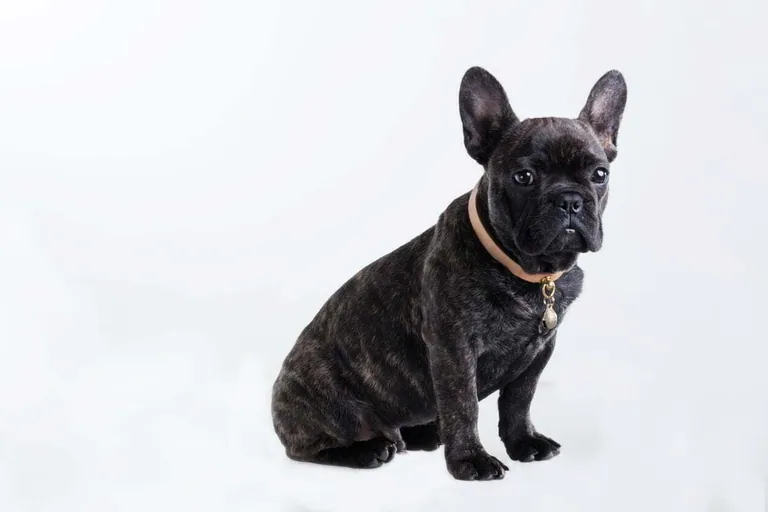
The breed standard lists brindle among the accepted patterns, alongside piebald, black masks, black shadings and white markings, on a base of white, cream or fawn (AKC breed standard). A brindle Frenchie is a completely standard Frenchie.
The genetics, briefly
Brindle comes from the K locus, which has three versions: dominant black (KB), brindle (kbr) and the one that lets other patterns show through (ky). They rank in that order, so KB beats kbr, and kbr beats ky (Laboklin).
That means a brindle dog carries either two copies of brindle (kbr/kbr) or one brindle and one ky. A dog with even one copy of dominant black won’t show brindle, though it can still pass brindle on. The older claim that a puppy needs a recessive brindle gene from both parents isn’t right: one copy is enough, provided there’s no dominant black.
How much striping shows depends on other genes, which is why no two brindle Frenchies look quite the same.
The variations, and which ones are real
Inside the standard, you’ll see brindle described in a few ways, mostly depending on how much white is present:
- Brindle: predominantly dark, with lighter hairs throughout.
- Brindle and white: a brindle dog with white markings.
- White and brindle, sometimes called brindle pied: mostly white with brindle patches.
- Seal brindle: an informal term for brindle so dark the dog looks almost black until you see it in sunlight.
- Tiger brindle: another informal term, for bold, clearly separated striping.
The last two aren’t official categories; they’re descriptions breeders and owners use.
Then there are the ones sold at a premium that aren’t standard at all:
- Blue brindle is brindle on a blue (diluted) base. Blue is a disqualification.
- Chocolate brindle is brindle on a chocolate base. Chocolate is a disqualification.
- Merle brindle combines brindle with merle, which is also a disqualification and carries hearing and sight risks.
None of these are rarer or more valuable in any meaningful sense; they’re outside the standard. The breed club is blunt about the marketing, saying breeders who “breed for and advertise rare colors are intentionally spreading unacceptable color genes through the gene pool” (FBDCA). Our colors guide covers each disqualified color and the health concerns attached to some of them.
The practical point: a brindle Frenchie shouldn’t cost more than any other standard-colored Frenchie, and a “blue brindle” premium is buying a disqualification.
Living with a brindle Frenchie
The coat pattern changes nothing about temperament, health or care. A brindle French Bulldog is a French Bulldog, with everything that comes with the breed.
The good parts. They’re small enough for an apartment, they don’t need much exercise, they’re companionable and generally easygoing, and the short coat is simple to look after.
The realistic parts. They’re expensive, commonly advertised between $1,500 and $8,000, though those are advertised prices rather than a market rate; our price guide breaks the costs down. And they carry the breed’s health load: breathing problems, skin fold infections, ear problems, cherry eye, kneecap and spinal disease. Our health issues guide covers each, and pet insurance is worth arranging early.
Climate matters more for this breed than most. Flat-faced dogs overheat easily and tire quickly (PDSA), and a thin coat means they feel the cold too. Mild temperatures, indoors, with air conditioning in summer.
Care
- Brushing. Once a week with a slicker brush keeps loose hair down. Frenchies shed moderately, year-round; our shedding guide covers what’s normal.
- Bathing. When your dog needs it rather than on a fixed quota, with water kept out of the ears. Our bathing guide covers it.
- Folds and ears. Clean and dry the face folds and tail pocket regularly, and check ears weekly.
- Food. A complete food suited to your dog, measured, with treats inside 10% of daily calories. Our food guide covers the diet, and our weight guide covers why staying lean matters so much here.
- Water safety. Frenchies are poor swimmers; never leave one unsupervised near water. Our swimming guide covers life jackets.
- Being alone. Frenchies are prone to separation anxiety. A crate can be a useful den for a dog who likes it, but it isn’t a treatment for a dog who panics when left, and crating an anxious dog can make things worse (VCA Animal Hospitals). Our separation anxiety guide covers what does help, and our crate training guide covers doing it properly.
Finding one
Brindle is common, so you don’t need to hunt for it or pay extra.
From a breeder, judge on health rather than coat. Ask about BOAS grading, health testing on both parents, and watch how the parents breathe at rest. The AKC’s Breeder of Merit program is one starting point, and our questions to ask a breeder covers the rest. A rushed process or a bargain price are both warnings.
From rescue, brindle dogs turn up regularly. Rescues often know more about an adult dog’s temperament and health than a breeder can tell you about a puppy, and our rescue guide covers how to choose one. Petfinder and French Bulldog Village are places to start.
The short version
Brindle is a standard, common, handsome French Bulldog pattern produced by a single gene, and it needs one copy, not two. Treat any premium for “rare” brindle variations with suspicion, because the rare ones are the disqualified ones. Otherwise a brindle Frenchie is exactly like any other Frenchie: lovely company, and a dog whose health needs planning for.