Dog Nutrition
Can French Bulldogs Eat Cheese?
Yes, in very small amounts. But one cube of cheddar is roughly a Frenchie's entire daily treat allowance, and some cheeses shouldn't be shared at all.
Table of contentsContents
Yes, most French Bulldogs can have a little cheese, and most love it. The question isn’t really whether it’s safe. It’s how quickly a small piece uses up everything your dog should be eating outside their meals.
The number that matters
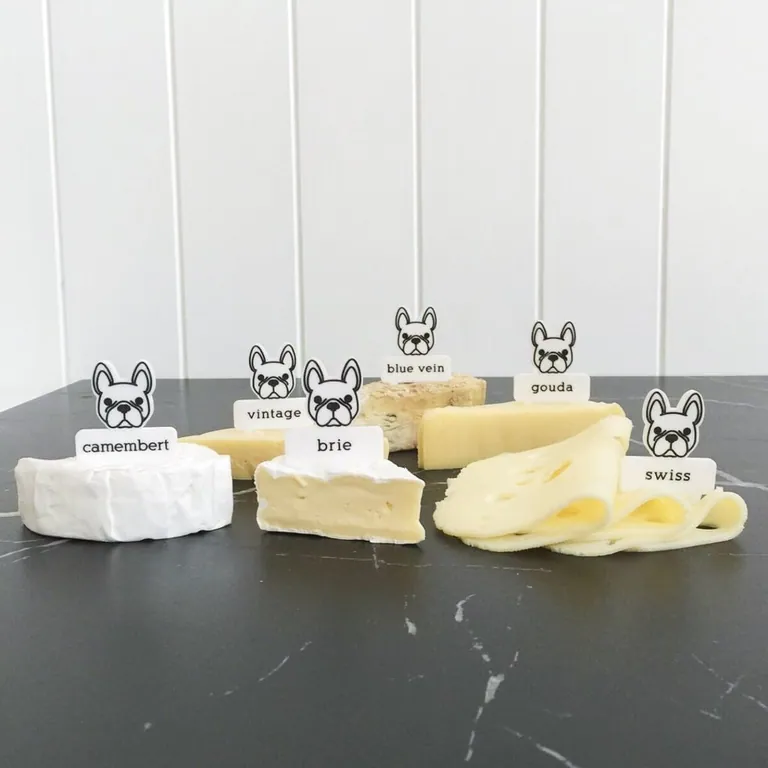
Sharp cheddar runs about 410 calories and 34 grams of fat per 100 grams, with around 644mg of sodium (USDA FoodData Central).
A one-inch cube weighs roughly 17 grams, which comes to about 70 calories.
An adult French Bulldog of 18 to 28 pounds eats somewhere around 500 to 700 calories a day, and treats should stay inside 10% of that: roughly 50 to 70 calories.
So one cube of cheddar is the whole day’s allowance. Half a slice off your sandwich is more than it. That’s not a reason to never give cheese; it’s the reason to give it in pieces the size of a pea rather than pieces the size of a snack.
Our weight guide covers body condition scoring, which matters more than any number on a scale (WSAVA), and our food guide covers the daily diet.
Why the calories matter more in this breed
Extra weight makes breathing harder in a dog whose airway is already the problem. A Frenchie carrying two extra pounds is carrying them on a frame that struggles to cool itself and tires quickly. Our health issues guide covers the connection.
It’s also one of the easiest things to get wrong, because cheese is what people reach for when they want the dog to take a tablet.
Lactose
Dogs vary. Some handle dairy perfectly well; others get wind, loose stools or stomach ache from a small amount.
Hard aged cheeses like cheddar and parmesan contain relatively little lactose, because most of it is lost in the making. Soft and fresh cheeses — cottage cheese, ricotta, cream cheese, processed slices — contain more. If your dog is going to react, it’s usually those.
Puppies aren’t more tolerant than adults, whatever the intuition suggests, so start smaller with them, not bigger.
Fat, and pancreatitis
Cheese is a third fat by weight. A fatty meal may trigger pancreatitis in some dogs, though the condition often appears without any identifiable cause (VCA Animal Hospitals).
That’s a reason to keep portions small and occasional rather than to panic about a cube of cheddar. What’s worth avoiding is a dog getting into a large quantity at once: the cheese board left on the coffee table, the end of a pizza.
Signs to call a vet about: repeated vomiting, a hunched posture or a tender belly, refusing food, or obvious lethargy after a fatty meal.
Salt
Cheddar carries around 644mg of sodium per 100g, so a cube has roughly 110mg. That’s a meaningful amount for a small dog as a daily habit, and irrelevant as an occasional treat.
The earlier version of this article said a dog eating cheese “may even temporarily lose consciousness due to the abundance of salt”. Salt toxicity is real, but it takes far more salt than anyone shares from a sandwich, and the usual culprits are things like homemade play dough or seawater rather than cheese.
Cheeses not to share at all
- Anything containing onion, garlic or chives. These are toxic to dogs, and they turn up in flavoured cheeses, cheese spreads and cheese-and-onion anything (ASPCA).
- Blue cheeses. The moulds used in them can produce tremorgenic toxins, which cause vomiting, tremors and in bad cases seizures (Merck Veterinary Manual). Vets advise keeping dogs away from blue cheese, and it’s not worth the argument.
- Very salty or heavily processed cheeses, which are high in sodium and often in additives too.
- Anything mouldy that isn’t meant to be. The mould on forgotten cheddar is a different problem, and the same toxins apply.
If your dog is itchy
French Bulldogs are prone to skin problems, and dairy is among the more common food allergens in dogs. If your Frenchie is itchy, has recurring ear trouble or loose stools, cheese is one of the first things to stop while you investigate with your vet. Our food allergies guide covers elimination diets.
How to give it sensibly
- Pea-sized pieces. Not slices, not cubes.
- Hard cheese like cheddar or parmesan rather than soft or processed.
- Plain, with nothing added.
- Count it. If your dog gets cheese today, they get less of everything else.
- Use it where it earns its keep: hiding a tablet, or as a high-value reward for recall training, where the value of the treat actually matters. Our training guide covers that.
Cottage cheese, plain and low-fat, is a lower-calorie option at roughly a quarter the calories of cheddar, though it carries more lactose.
The short version
Cheese is safe for most French Bulldogs in very small amounts, and expensive in calories: one cube of cheddar is about a whole day’s treat allowance for a dog this size. Stick to pea-sized pieces of plain hard cheese, skip anything with onion or garlic in it, keep blue cheese away entirely, and stop altogether if your dog is itchy or windy.