Dog Nutrition
Can French Bulldogs Eat Eggs? Cooked Yes, Raw No
Eggs are safe for dogs when they're cooked and plain. Why raw eggs aren't worth the risk, how much a small dog can actually have, and what a reaction looks like.

Table of contentsContents
Eggs are one of the few human foods that are genuinely good for dogs: cheap protein, easy to prepare, and most dogs love them. The two things worth getting right are cooking them and keeping the portion small, which for a French Bulldog is smaller than most people expect.
The short answer
Cooked, plain eggs are safe for dogs and a good source of protein, healthy fats, vitamins and minerals (AKC). Raw eggs aren’t worth the risk. And a whole egg is a lot of food for a 25-pound dog.
How much is sensible
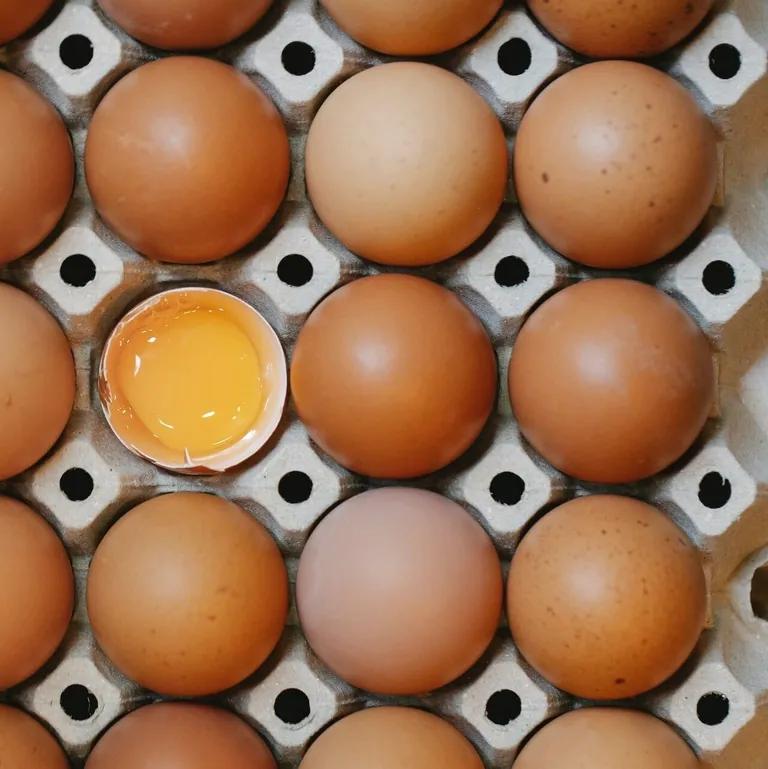
Here’s the arithmetic most articles skip. A large hard-boiled egg weighs about 50 grams, and hard-boiled egg runs 155 calories per 100 grams, so one egg is roughly 78 calories (USDA FoodData Central).
Treats should stay within about 10% of a dog’s daily calories (VCA Animal Hospitals). For a typical 25-pound French Bulldog that allowance is roughly 50 to 70 calories a day. So a single egg is more than a whole day’s treats.
In practice:
- A quarter of a hard-boiled egg, chopped over dinner or used as training rewards, is a sensible amount for a Frenchie.
- Half an egg is an occasional treat, not a daily one, and the rest of that day’s treats come off.
- Subtract it from their meal rather than adding it on top.
Frenchies gain weight easily, and extra weight makes their breathing worse. Our weight guide covers why that matters so much in this breed, and our food guide covers the main diet.
Why not raw
Two reasons, and the first one affects you as well as your dog.
Salmonella. Raw eggs can carry it. A dog who eats a contaminated egg can develop salmonellosis, with fever, vomiting, diarrhea and lethargy, and people in the household can be exposed too, both from the raw egg itself and from the dog (AKC; FDA).
Biotin. Raw egg white contains avidin, which blocks the absorption of biotin, a B vitamin involved in skin and coat health. Yolks contain biotin, which offsets some of this, but cooking removes the problem entirely (AKC).
Cooking costs you three minutes and removes both risks. There’s no nutritional advantage to raw that justifies it.
How to serve them
Plain is the whole trick. No oil, butter, salt, seasoning or spices (AKC). That rules out sharing your breakfast, which is usually cooked with at least one of those.
- Hard-boiled is the easiest: cook, cool, chop, portion. It keeps in the fridge for a few days.
- Poached works too, since it’s just water.
- Scrambled is fine as long as it’s dry-cooked with nothing added.
Skip the shells. They do contain calcium, but the sharp edges can injure the throat or gut, so they’re not worth it (AKC).
Introduce eggs the way you’d introduce anything new: a small amount, once, and wait a day to see how your dog does.

What’s actually in an egg
A cooked egg brings protein, fat, and a useful set of vitamins and minerals, including vitamins A, D, B2 and B12, plus iron, zinc, selenium and phosphorus.
Worth being clear about one thing: your dog doesn’t need eggs. A complete, balanced dog food already provides all of this, and eggs are a treat rather than a supplement. You will often read that eggs make a dog’s coat shine. If a coat is dull, that’s usually a diet, skin or parasite question for your vet rather than something to fix with eggs, and there’s certainly no reason to rub raw yolk into your dog’s fur, which is an old piece of advice worth retiring.
If coat condition is the concern, talk to your vet about whether a complete food that suits your dog, or an omega-3 supplement at the right dose, would help more.
Signs your dog doesn’t agree with eggs
Egg is one of the more common food allergens in dogs. Watch for:
- Itchy skin, or red and inflamed skin
- Recurring ear problems
- Vomiting or diarrhea
- Coughing or wheezing, or any swelling of the face
Stop feeding eggs and call your vet if you see any of these. Breathing difficulty or facial swelling needs a vet immediately. Our guide to French Bulldog food allergies explains how food reactions are properly diagnosed, which is with an elimination trial rather than guesswork.
Some dogs should skip eggs altogether: those on an elimination diet, those with pancreatitis or a history of it, and any dog whose vet has them on a specific diet. Ask first if your dog is in one of those groups.
Other foods people ask about
Our bread guide covers the loaf on the counter, and our toxic foods guide covers what’s genuinely dangerous. Frenchie owners also ask about apples and cheese.
Frequently asked questions
Can French Bulldogs eat eggs?
Yes, cooked and plain, in small amounts. They’re a treat, not a dietary requirement.
How much egg can a French Bulldog have?
Less than you’d think. One large egg is about 78 calories and a 25-pound Frenchie’s whole daily treat allowance is roughly 50 to 70. A quarter of an egg is a reasonable portion.
Can dogs eat raw eggs?
Better not. Raw eggs can carry salmonella, which can also spread to people in the house, and raw white contains avidin, which blocks biotin absorption.
Can dogs eat eggshells?
Skip them. The calcium isn’t worth the risk of sharp fragments.
Are scrambled eggs OK for dogs?
Only if they’re cooked dry, with no butter, oil, milk, salt or seasoning.