French Bulldog
French Bulldog Mixes: 13 Crosses, and What Each One Inherits
Thirteen French Bulldog crosses, what each is likely to inherit, and the two questions that matter more than the name: how flat is the face, and how big is the other parent.
Table of contentsContents
French Bulldogs are the most popular breed in the United States, and where a breed is popular, crosses follow. There are a lot of them, most with a portmanteau name, and they’re generally sold at Frenchie prices.
The name tells you nothing useful. Two questions do:
- Does the other parent have a muzzle? This is the one that decides whether the puppy can breathe comfortably.
- How big is the other parent, and which one is the mother? This decides how dangerous the pregnancy is.
Work through those and the list below mostly sorts itself.
Why the muzzle question matters
French Bulldogs carry the breed’s problems because of the shape of the head, not because they’re purebred. Compared with other dogs in the UK, they had 42 times the odds of narrowed nostrils and 31 times the odds of brachycephalic obstructive airway syndrome (O’Neill and colleagues, 2021), and only around 10% score free of BOAS signs (Tomlinson and colleagues, 2024).
A cross helps with that only if it lengthens the face. Cross a Frenchie with another flat-faced breed and you get a flat-faced dog whose parents were both flat-faced, which is not an improvement and can be worse.
This is where “mixed breeds are healthier” goes wrong. Crossing does reduce the chance of inheriting two copies of a recessive disease gene, which is a real benefit. It does nothing about a skull shape both parents share.
Why the size question matters
More than 80% of French Bulldog litters are already delivered by caesarean section (Evans and Adams, 2010), because of the breed’s narrow hips and large-headed puppies.
Now put a Rottweiler or German Shepherd sire over a French Bulldog mother and the puppies are bigger still. That is a serious risk to the mother, and it’s the reason those particular crosses belong in a discussion of ethics rather than a list of cute options. Where such crosses exist, the Frenchie is usually the sire and the larger breed the dam, which is safer for the mother but says something about how the litter came about.
The crosses, grouped by what they inherit
Both parents flat-faced: expect the breathing problems
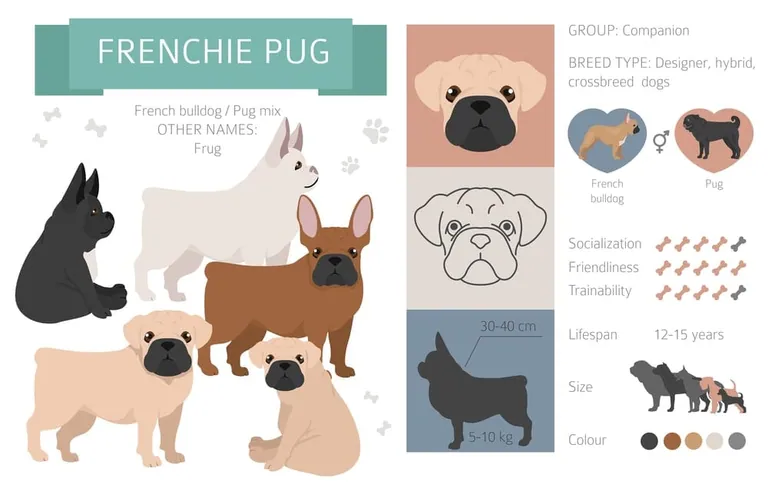
Frug (Pug × French Bulldog). Two of the most brachycephalic breeds there are. Charming, sociable, and at real risk of BOAS from both sides. Short walks in cool weather, and a vet who knows the breed. Our Frenchie versus Pug comparison covers both.
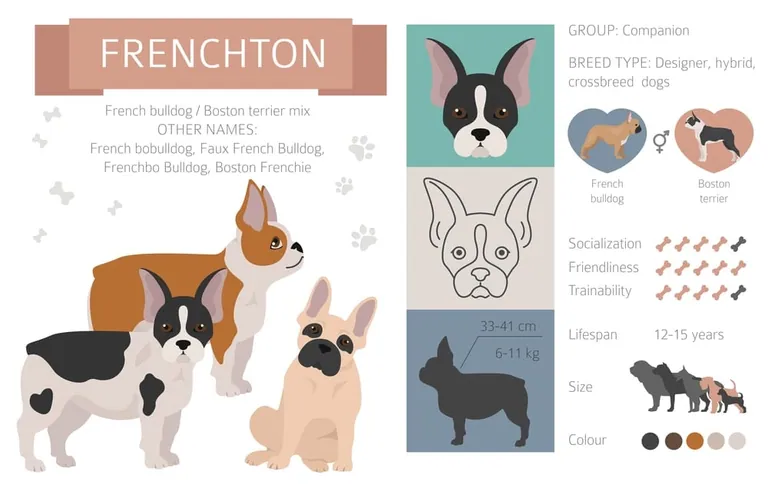
Frenchton (Boston Terrier × French Bulldog). The most common cross by far. Bostons are flat-faced too, though usually less extreme, so a Frenchton often has a slightly better airway than a Frenchie without being a long-muzzled dog. Our Frenchton guide covers it properly, and our comparison of the two parent breeds covers where they differ.
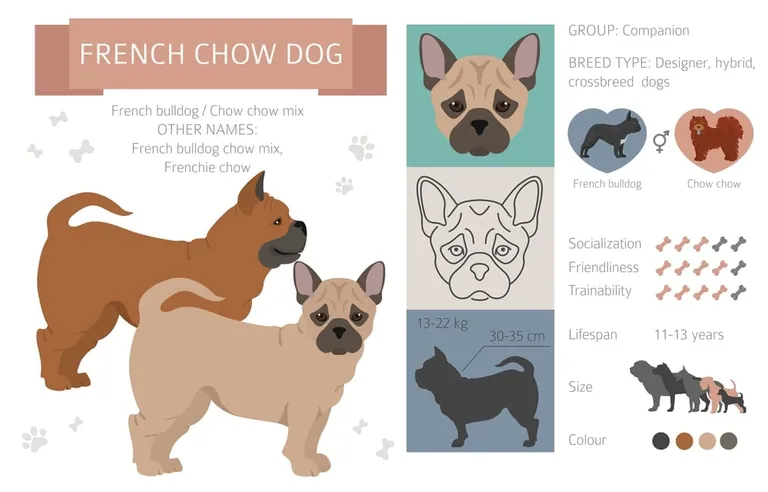
French Chow Dog (Chow Chow × French Bulldog). Chows are also brachycephalic, and bring a thick double coat and a reserved temperament to a dog that already overheats easily. An awkward combination.
One parent with a muzzle: the crosses that can improve the airway
Frengle (Beagle × French Bulldog). A proper muzzle and much better stamina, plus a Beagle’s nose and voice. Expect a dog that needs more exercise than a Frenchie and may be noisier.
Froodle (Poodle × French Bulldog). A longer face and often a coat that needs clipping every few weeks for life, which surprises people. Not hypoallergenic in any reliable sense, whatever the advertisement says.
French Pin (Miniature Pinscher × French Bulldog). Lighter, longer in the muzzle, and considerably more energetic than a Frenchie.
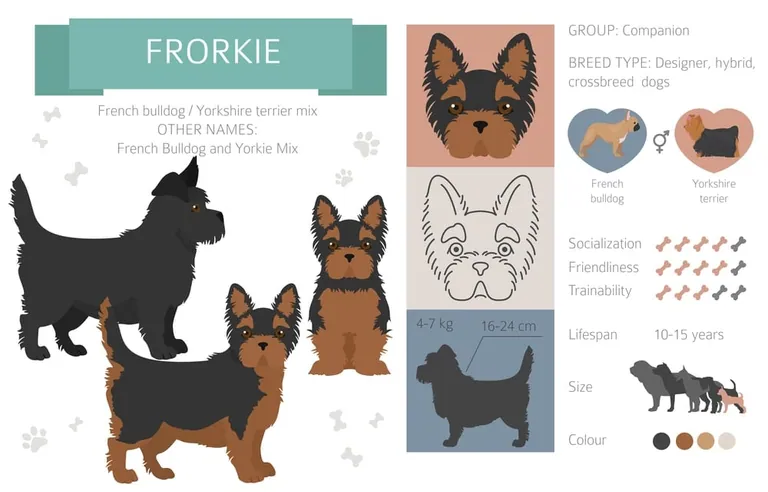
Frorkie (Yorkshire Terrier × French Bulldog). Small, with a variable coat and a terrier’s opinions. Adult size is unpredictable.
French Pomerdog (Pomeranian × French Bulldog). Small, coat varies enormously between littermates, often vocal.
French Pitbulldog (American Pit Bull Terrier × French Bulldog). More muzzle and a great deal more dog: strong, athletic, needing real exercise. Also worth checking local restrictions, which in some places apply to the cross.
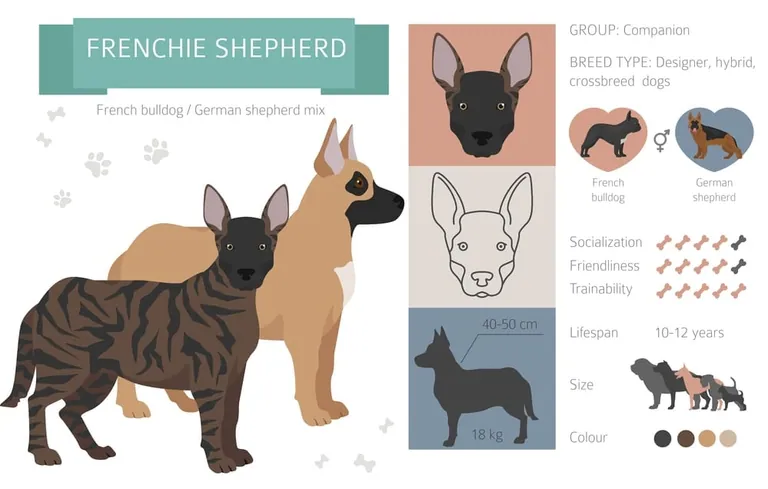
French Shepherd (German Shepherd × French Bulldog) and French Bullweiler (Rottweiler × French Bulldog). Size disparity makes these the ones to think hardest about, for the reason above. The puppies, if healthy, are large, powerful dogs with a Frenchie’s face somewhere in the mix.
The two that also carry a colour risk
French Bullhuahua (Chihuahua × French Bulldog) and French Bull-Aussie (Australian Shepherd × French Bulldog).
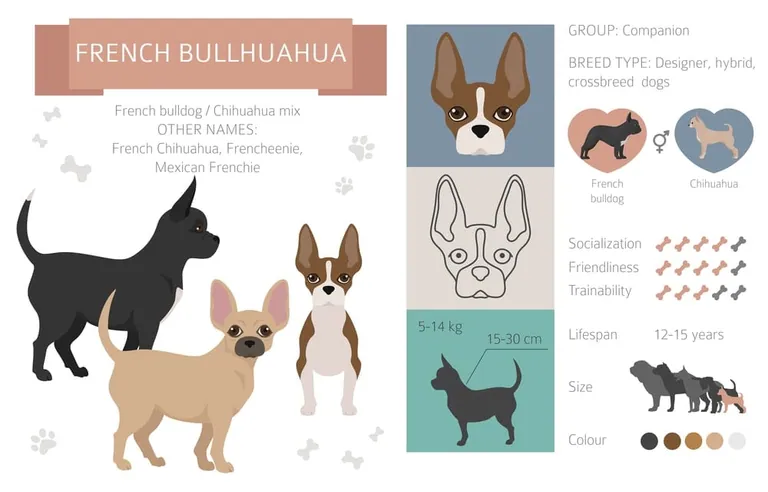
Both bring more muzzle, which is good. Both are also the documented routes by which the merle gene entered dogs sold as French Bulldogs, and merle brings its own risks: breeding two merles together produces double merles, of which 15% are deaf in both ears (Strain and colleagues, 2009). If either cross is in the picture, ask for merle DNA results on both parents. Our merle guide explains why eyes alone won’t tell you.
Australian Shepherds are also working dogs with working-dog exercise needs, which is a lot to ask of a body that’s half French Bulldog.
Choosing one
Size. Ask what both parents weigh. In a cross, adult size is a range rather than a number, and littermates can differ a lot; our growth chart only really applies to purebred Frenchies.
Temperament. Expect either parent’s, or a blend. A herding or terrier parent brings drives a Frenchie doesn’t have.
Exercise. Match the more active parent’s needs, then watch the dog’s breathing to see what they can actually manage.
Health. Ask what both parents have been tested for, and watch them breathe at rest. Our breeder questions guide applies to crossbreeds exactly as it does to purebreds.
Price. No kennel club registers these crosses, so there’s no papers, no breed standard and no club oversight. A crossbreed priced like a pedigree is worth questioning, and our price guide covers what Frenchies cost.
Rescue. Crosses turn up in rescue regularly, often as adults whose size and temperament are already known, which solves most of the unpredictability above. Our rescue guide covers finding one.
The short version
A French Bulldog cross is a good idea when the other parent brings a muzzle and a similar body size, and a questionable one when it brings another flat face or forty extra pounds. The cute name is the least informative thing about any of these dogs; what the puppy inherits from the other half is the whole question.