French Bulldog
Long-Haired French Bulldogs: Genetics, Care and What the Standard Says
What makes a French Bulldog long-haired, why the breed standard disqualifies the coat, how to groom one, and what to know before paying a premium for a fluffy Frenchie.

Table of contentsContents
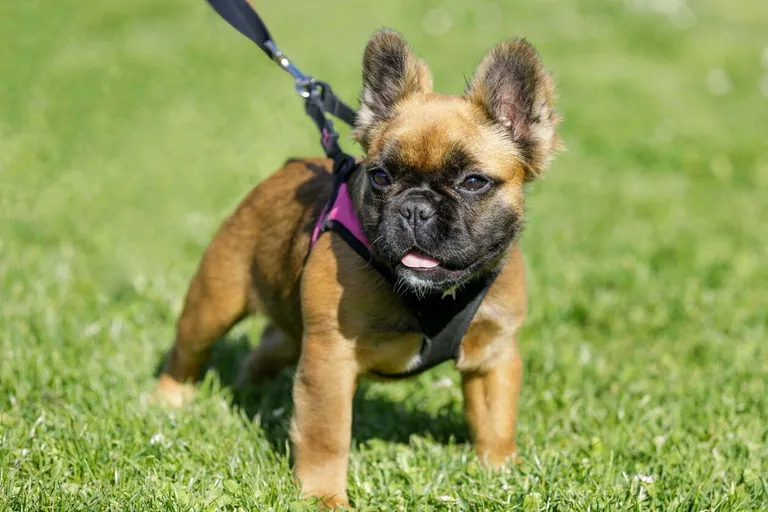
A long-haired French Bulldog, often sold as a “fluffy Frenchie”, looks like any other Frenchie with a soft, medium-length coat that feathers around the ears, chest and back. They are genuinely French Bulldogs. They are also outside the breed standard, and that’s worth understanding before you go looking for one.
Where the long coat comes from
Coat length in dogs is controlled largely by a gene called FGF5, which tells hair follicles when to stop growing. Several variants of it produce long hair, and all of them are recessive (Maki and colleagues, 2025). The variant usually found in French Bulldogs is known as L4 (Slovgen).
Recessive means a puppy needs two copies, one from each parent, to have a long coat. A dog with one copy has a normal short coat but can pass the variant on. So two short-coated parents who both carry L4 can produce long-haired puppies: on average, about a quarter of their litter. A DNA test tells you whether a dog carries it.
What the breed standard says
The French Bulldog standard is explicit: “Coats other than short and smooth are a disqualification” (AKC breed standard). A long-haired Frenchie can’t compete in the conformation ring. That doesn’t make it any less a French Bulldog, but it does mean the long coat is not a variety of the breed, and anyone breeding for it is deliberately breeding away from the standard.
The breed club takes a firm line on this kind of breeding. On colors outside the standard, it says breeders who “breed for and advertise rare colors are intentionally spreading unacceptable color genes through the gene pool” (FBDCA). Fluffy Frenchies are often bred and sold alongside those same colors.
Colors
A long-haired Frenchie can come in any color a short-haired one can. Under the standard, acceptable colors are white, cream and fawn, in combinations, with brindle, piebald, black mask and white markings. Solid black, black and tan, blue, blue fawn, liver and merle are disqualifications. Our colors guide explains each one, including the health concerns tied to merle.
Health
The long coat itself isn’t known to cause disease. A long-haired Frenchie has the same body, the same flat face and the same health risks as any other: breathing problems, skin fold infections, ear infections, allergies, cherry eye, kneecap and spinal problems. Our health issues guide covers each one.
The concern is indirect. When a breeder’s selling point is a rare look, health testing can take second place. Whoever you buy from, ask about BOAS grading and health testing for both parents, and ask to see how the parents breathe at rest.
Grooming
A long coat needs more attention than a short one. Brush two or three times a week, paying attention behind the ears and under the legs, where medium-length hair tangles first. A self-cleaning slicker brush works well on both coat types. A waterless shampoo is handy for freshening the coat between baths.
Bathe when your dog needs it, dry the coat thoroughly, and keep water out of the ears. Our bathing guide covers how often and how. The skin folds need cleaning and drying just as they do in a short-coated Frenchie.
Temperament
A long coat doesn’t change personality. Long-haired Frenchies are as affectionate, people-focused and occasionally stubborn as any other French Bulldog, and they are just as unhappy being left alone for long periods.
Price
Long-haired Frenchies are commonly advertised at a premium, often somewhere between $5,000 and $15,000. Treat those as advertised prices, not a market rate. Nobody publishes verified figures, and the premium reflects rarity, not quality or health. Our French Bulldog price guide explains what drives Frenchie prices and what to budget after you bring one home.
Finding one
There is no such thing as an “AKC-approved” breeder. The AKC registers dogs; it doesn’t certify breeders as good. Judge a breeder on health testing, openness about both parents, and willingness to answer hard questions. Our list of questions to ask a French Bulldog breeder is a good start.
Rescue is worth considering too. French Bulldogs, fluffy ones included, turn up in breed rescues and general shelters, and our guide to buying or adopting weighs the two routes.
Is a long-haired Frenchie right for you?
If you love the look and are prepared for a little more grooming, a long-haired Frenchie makes the same devoted companion as any other. Go in knowing that the coat is a disqualification under the standard, that the premium buys rarity rather than health, and that the breeder’s health testing matters far more than the coat.