
French Bulldog
French Bulldog Puppies: The Complete Guide for New Owners
Everything a new Frenchie owner needs: puppy-proofing, the first nights, socialization, feeding by age, vaccinations and worming, grooming, and what to expect month by month.

Table of contentsContents
Bringing home a French Bulldog puppy is mostly like bringing home any puppy, with a few breed-specific things that matter more than usual: heat, breathing, skin folds, and a dog who really doesn’t want to be left alone.
This guide covers the practical parts in order, from the week before your puppy arrives to the end of the first year.

Before your puppy arrives
Puppy-proof the house
Puppies investigate with their mouths, and Frenchie puppies are low, fast and curious.
- Small objects. Coins, hair ties, jewelry, batteries and children’s toys all get swallowed, and some cause serious damage. Bins go behind a door.
- Cords and sockets. Cables out of reach, unused sockets covered.
- Medicines. Human painkillers are genuinely dangerous to dogs: ibuprofen, naproxen, acetaminophen and aspirin can cause stomach ulcers, kidney failure and worse. Never give a human medicine unless your vet prescribes it (FDA).
- Plants. Check what you have against the ASPCA’s toxic plant list rather than guessing. Most houseplants are only mildly irritating, but some, like lilies, sago palm and oleander, are serious.
- Stairs and gates. A baby gate keeps a puppy in a safe room and off stairs, which matters for a long-backed breed.
What to buy
- Bowls. Shallow and wide suits a flat face. Stainless steel is easiest to keep clean.
- A bed, plus a crate. Soft and washable, and expect it to be chewed. The crate becomes a place your puppy likes rather than a punishment; our crate training guide covers doing it properly.
- A harness and a light leash. Walk a Frenchie on a harness rather than a collar, because pressure on the neck makes breathing harder. Keep a flat collar for ID tags. Our harness guide covers types and fitting. No slip leads or chain collars.
- Toys, including something to chew. Chewing is normal and useful; it just needs to be aimed at the right objects. Avoid anything small enough to swallow, cat toys, children’s toys and cooked bones, which splinter. Our toy guide has options.
- A coat. Frenchies feel the cold, so a jacket or sweater earns its place in winter. Our winter tips cover the rest.
The first few days
Your puppy has just left everything they know. Expect them to sleep a great deal, and let them: puppies need 18 to 20 hours of sleep a day (AKC). An overtired puppy gets wild, not sleepy.
Set up a quiet spot where your puppy can see the family without being in the traffic, and teach children to leave a sleeping puppy alone. Decide now which rooms and furniture are allowed, because changing the rules later is much harder than setting them.
A little loose stool in the first days is common with the stress of the move. If it persists, gets worse, or comes with vomiting or lethargy, call your vet.
The first nights
Most puppies cry the first night or two. The approach that works with least fuss is to have the crate beside your bed, so your puppy can hear and smell you, then move it gradually to where you want it over the following weeks. A quiet word is enough to settle most puppies.
A puppy who wakes in the night usually needs the toilet. Take them out, keep it boring, and put them straight back.
Learning to be alone
This matters more in this breed than most, because Frenchies are companion dogs and separation anxiety is common. Start early and build slowly: settle your puppy with something to chew, step out of the room for a minute, and come back before they get worried. Build up from there, and vary the length so it’s not predictable.
If your dog panics when left rather than just grumbling, that’s separation anxiety, and our separation anxiety guide covers it. Crating a dog who panics can make things worse.
House training
Take your puppy out first thing, after every meal, after every nap, after play, before bed, and roughly every hour in between. Reward the moment they finish, outside, with a treat. Never punish an accident; it teaches a puppy to hide where they go, which makes everything harder.
A rough guide to bladder capacity is the puppy’s age in months plus one, in hours, and even that only applies when they’re asleep or settled. Our potty training guide has a full schedule by age.
Socialization: the most important month
The first three months of life are the most important window for socialization, and incomplete socialization is a leading cause of behavior problems later (AVSAB). This is not something to postpone until vaccinations are finished: AVSAB recommends puppy classes from 7 to 8 weeks, after one set of vaccines given at least 7 days beforehand, and makes the point that behavior problems, not infection, are the leading cause of death in dogs under three.
What socialization actually means is lots of short, positive experiences at your puppy’s pace:
- People of different ages and appearances, including children, at a distance your puppy is comfortable with.
- Calm, healthy, vaccinated adult dogs. Not a free-for-all at the dog park.
- Household noise: vacuum, doorbell, TV, hairdryer.
- Surfaces, car journeys, the vet’s waiting room, being handled all over.
Let your puppy approach things rather than carrying them into the middle of it, and reward curiosity. If something frightens them, add distance and try again later with more space.
One correction worth making: comforting a frightened puppy does not reward the fear. It’s fine to gently pet or sit with a scared dog (VCA Animal Hospitals). What does cause harm is punishing a frightened dog, or forcing them into the thing that scares them.
Training and behavior

Reward-based training is the approach with the most advantages and the least harm, and methods relying on force, pain, fear or startle should not be used (AVSAB). That also means the old advice about rank and dominance has gone: you don’t need to eat first, go through doors first, or “show who’s boss”. Dogs aren’t trying to take over the household, and treating training as a status contest makes fearful and defensive dogs.
What does work is consistency, short sessions of three to five minutes, tiny treats, and everyone in the house using the same words. Our training guide covers the basic commands step by step, and our guide to French Bulldog stubbornness covers the sticking points.
Mouthing and biting
Puppies bite in play; it’s how they learn. When teeth touch skin, stop the game, go quiet for a moment, then offer a toy and carry on. No smacking, no holding the muzzle, no rolling the puppy over.
Barking
Frenchies aren’t big barkers, but many announce visitors. Thank them, then redirect: a treat scattered on the floor or a chew gives them something else to do. Good socialization does more than any command here.
Growling
Never punish a growl. A growl is information, and a dog who is punished for growling learns to skip the warning and go straight to snapping. Work out what your dog is uncomfortable about and remove or change it.
When to get help
Aggression isn’t a leadership problem; it’s usually fear or pain. Any biting that isn’t play, any growling over food or being handled, and any fear that isn’t improving is worth a conversation with your vet, who can rule out pain and refer you to a qualified behaviorist. Early help is cheaper and more effective than late help.
Everyday care

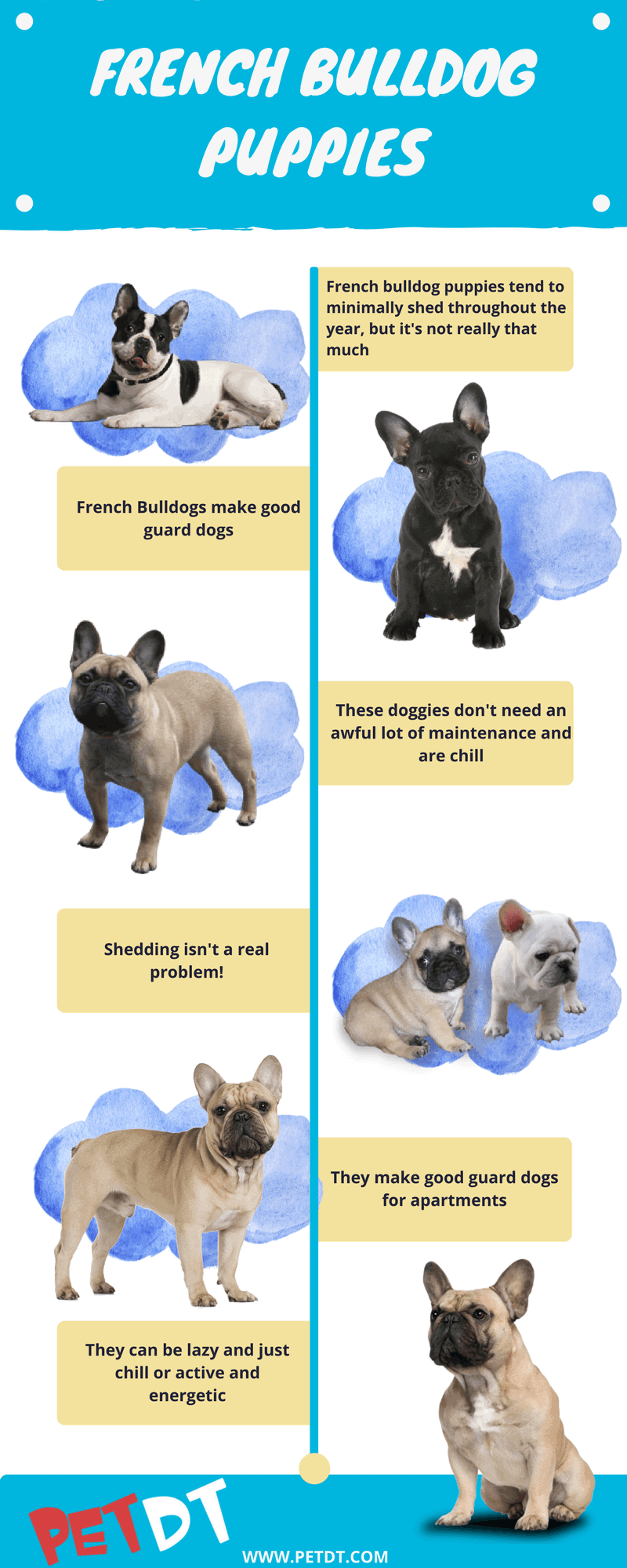
Start all of this in the first weeks, in tiny doses, with treats. A puppy who is used to having their feet and ears handled is an adult who doesn’t fight the vet.
- Skin folds. Wipe and dry the face folds a few times a week, and check the tail pocket if your dog has one; our tail guide covers it.
- Ears. Check weekly, clean only when there’s build-up, and never push cotton buds into the canal. Don’t pluck hair from the ear canal. Our ears guide covers what a problem looks like.
- Eyes. Wipe away normal discharge with clean water on cotton wool. Persistent weepiness, squinting or cloudiness is a vet visit, not something to treat at home with drops or home remedies.
- Nails. Trim little and often, or ask your vet or groomer to show you the first time.
- Brushing. Once a week is plenty for a short coat. A deshedding brush is useful in heavier shedding spells; use a light hand, since Frenchies have a single coat and sensitive skin. Our shedding guide covers what’s normal.
- Baths. When your dog needs one, not on a fixed quota, with a dog shampoo and water kept out of the ears. Our bathing guide covers frequency and technique.
Health in the first year

Book a check-up in the first few days so your vet can look your puppy over and so the visit is a pleasant one.
Vaccinations
The puppy series starts at 6 to 8 weeks and repeats every 2 to 4 weeks until your puppy is over 16 weeks old, then a booster within a year (AAHA). After that, core vaccines are generally given every three years rather than annually, though rabies requirements vary by state and non-core vaccines depend on where you live and what your dog does. Your vet will set the schedule.
Worming and parasites
Puppies are wormed from 2 weeks of age, repeating every 2 weeks until 2 months, then monthly to 6 months, then at least quarterly, alongside year-round parasite control covering heartworm, intestinal worms, fleas and ticks (CAPC). Some worms are transmissible to people, especially children, so this isn’t optional.

Use a preventive your vet recommends. Flea collars, powders and sprays bought off a shelf are mostly outdated and some are ineffective or unsafe. Fleas also need treating in the house, not just on the dog.

To remove a tick, use fine-tipped tweezers, grasp it as close to the skin as possible, and pull upward with steady, even pressure. Don’t twist or jerk, which can leave mouthparts behind, and don’t use petroleum jelly, heat or nail polish (CDC). Clean the area afterwards.
Out and about
Until your puppy is fully covered, avoid communal water bowls, puddles, and grass heavily used by unknown dogs, and stick to dogs you know are healthy and vaccinated.
Breed-specific things to watch
- Breathing. Noisy breathing at rest, gagging, or tiring quickly isn’t “just the breed” and deserves a vet’s opinion (PDSA).
- Heat. Frenchies overheat easily. Walk in the cool part of the day and never leave your dog in a car or a hot room.
- Reverse sneezing. Sudden snorting inhalations that stop after a few seconds are common and usually harmless; our reverse sneezing guide explains it.
- Shivering. Frenchies shiver easily, from cold or excitement. Persistent shivering with other signs is worth checking.
Our health issues guide covers the breed’s common problems, and pet insurance is worth arranging while your puppy is young and healthy.
Feeding


Feed a complete food formulated for puppies, and keep whatever the breeder was using for the first week or two. If you change food, do it over a week or so, mixing a little more of the new food each day; an abrupt switch usually means diarrhea.
A rough schedule:
- Under about four months: three meals a day.
- Four months to a year: two meals a day.
- Adult: two meals a day, with the amount adjusted to body condition rather than the bag.
Fresh water always available. Lifting the water an hour or two before bed can help during house training, but never restrict water during the day.
Orphaned or very young puppies being weaned need a milk replacer rather than dog food. Esbilac and PetLac are the usual products, and weaning onto solid food is gradual.
Skip table scraps. This breed gains weight easily, and extra weight makes breathing and joints worse; our weight guide explains why it matters so much, and our food guide covers the diet properly. Treats stay within about 10% of daily calories. If you want to share human food, our guides to eggs, bread and peanut butter cover the common questions, and the toxic foods guide covers what never to give.
What to expect, month by month

- Weeks 0 to 2. Eyes and ears closed, sleeping and feeding. The puppy is with the breeder.
- Weeks 3 to 7. Senses come online, littermates teach bite inhibition, and the breeder’s socialization starts.
- Weeks 8 to 12. Homecoming for most puppies. Everything is new, sleep is constant, house training begins, and the socialization window is wide open.
- Months 3 to 4. Teething, chewing everything, and testing what works. Adult teeth start arriving; our teeth guide covers the timeline.
- Months 4 to 6. More confident and more independent, and recall gets worse before it gets better. Keep training short and rewarding.
- Months 6 to 12. Adolescence: a well-trained puppy may appear to forget everything for a while. Ears usually stand by now if they haven’t already. Most Frenchies reach adult size around a year.
Puppies also go through fear periods, where something they were fine with suddenly worries them. Don’t force it; add distance and rebuild.
Colors and size

The breed standard allows white, cream and fawn with brindle, piebald and black markings. Blue, lilac, merle, black and tan and chocolate are disqualifications, however they’re marketed, and our colors guide explains why that matters beyond the show ring. Long coats are a disqualification too; see our long-haired guide.
Adults shouldn’t weigh more than 28 pounds under the standard. Our weight guide covers how to judge condition properly.
Is a French Bulldog puppy right for you?

They suit people who want a close companion, live somewhere that stays cool, are home for a good part of the day, and can afford veterinary care that may be significant. They suit active outdoor households less well, and they’re expensive both to buy and to keep.
If you’re deciding, our honest look at whether French Bulldogs make good pets and our price guide are the two to read. If you’re choosing a breeder, our questions to ask covers health testing and what to look for, and rescue is worth considering too.
The short version
Puppy-proof before they arrive, let them sleep, socialize hard in the first months, train with rewards rather than rank, keep the folds and ears clean, follow your vet’s vaccination and worming schedule, and keep them lean and cool. The habits you build in the first year are the ones you live with for the next decade.